
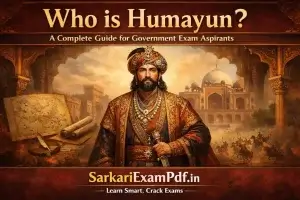
If you are preparing for competitive exams like UPSC, SSC, or State PSCs, the Mughal Empire is a topic you simply cannot skip. Among the Great Mughals, Humayun stands out as a figure of resilience. His life was a rollercoaster of victories, crushing defeats, and a triumphant return.
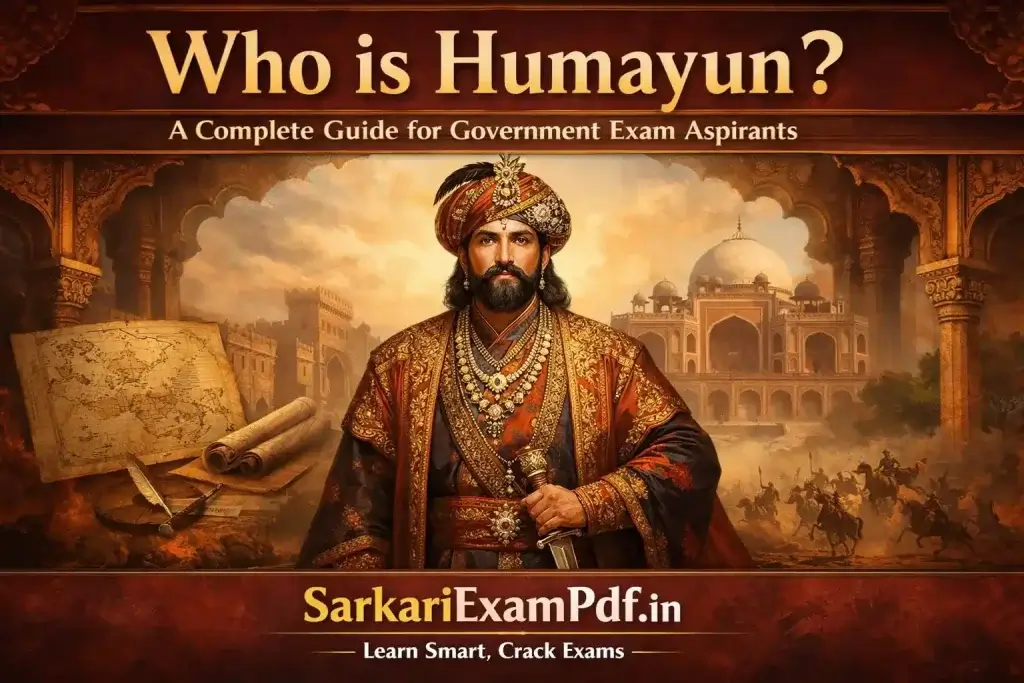
In this blog, we will dive deep into everything you need to know about Humayun, his struggles, his legacy, and the important facts often asked in exams.
The Early Life: Who is Humayun?
Nasir-ud-Din Muhammad, popularly known as Humayun, was the second Mughal Emperor. He was born in 1508 to Babur, the founder of the Mughal Empire, and Maham Begum. The name “Humayun” ironically means “Fortunate,” though his life was marked by significant misfortune and struggle.
He ascended the throne in 1530 at the young age of 22. Unlike his father, who was a hardened warrior, Humayun inherited a kingdom that was not yet consolidated and was surrounded by enemies like the Afghans (Sher Shah Suri) and the Rajputs.
The Great Struggle: Battles with Sher Shah Suri
Humayun’s reign is divided into two phases. His biggest rival was Sher Shah Suri, a brilliant Afghan leader. Two major battles changed the course of Indian history:
- Battle of Chausa (1539): Humayun was defeated by Sher Shah Suri. He barely escaped with his life by jumping into the Ganges.
- Battle of Kannauj (1540): This was the final blow. Humayun lost his kingdom and was forced to live in exile for 15 years in Persia (modern-day Iran).
The Comeback and Death: How did Humayun die?
With the help of the Safavid ruler of Persia, Humayun eventually recaptured Kabul and Kandahar. In 1555, taking advantage of the weak successors of Sher Shah Suri, he marched back to Delhi and reclaimed his throne.
However, his second reign was short-lived. How did Humayun die? In January 1556, he fell from the stairs of his library, the Sher Mandal, in Purana Qila, Delhi. The historian Lane-Poole famously remarked, “Humayun tumbled through life, and he tumbled out of it.”
Humayun Nama Kisne Likha? (The Literary Legacy)
One of the most frequent questions in SSC and Railway exams is: Humayun Nama kisne likha? (Who wrote the Humayun-Nama?).
The biography of Humayun was written by his sister, Gulbadan Begum. She wrote it at the request of Akbar to provide an account of her brother’s life. It gives us a rare glimpse into the personal lives and domestic affairs of the early Mughal royalty.
Humayun Ka Beta Kaun Tha? (Succession)
If you are wondering humayun ka beta kaun tha, the answer is the legendary Akbar the Great. Akbar was born in 1542 in Amarkot while Humayun was in exile. After Humayun’s sudden death in 1556, the 13-year-old Akbar was crowned king at Kalanaur, Punjab.
Architecture: Who built Humayun’s Tomb?
Humayun’s Tomb (Humayun ka Makbra) is a masterpiece of Mughal architecture and a UNESCO World Heritage site.
- Who built Humayun Tomb? It was commissioned by his first wife and chief consort, Empress Bega Begum (also known as Haji Begum).
- Humayun ka makbra kahan hai? It is located in Nizamuddin East, Delhi.
- Significance: It was the first garden-tomb on the Indian subcontinent and served as the inspiration for the Taj Mahal.
Practice Zone: Humayun MCQs for Aspirants
Q1. Humayun divided his court into how many categories? / हुमायूँ ने अपने दरबार को कितनी श्रेणियों में विभाजित किया था?
Check Answer
Q2. Which class included scholars and religious leaders? / विद्वानों और धार्मिक नेताओं को किस श्रेणी में शामिल किया गया था?
Check Answer
Q3. What was the ‘Tabl-i-Adl’ used for? / ‘तबल-इ-अदल’ का उपयोग किस लिए किया जाता था?
Check Answer
Q4. Humayun’s administration was based on which science? / हुमायूँ का प्रशासन किस विज्ञान पर आधारित था?
Check Answer
Q5. Who managed the ‘Ahl-i-Murab’ category? / ‘अहल-ए-मुराब’ श्रेणी का प्रबंधन किसने किया?
Check Answer
Q6. Which river hosted Humayun’s floating markets? / हुमायूँ के तैरते बाज़ारों की मेज़बानी किस नदी ने की थी?
Check Answer
Q7. Where was the library ‘Sher Mandal’ located? / ‘शेर मंडल’ पुस्तकालय कहाँ स्थित था?
Check Answer
Q8. Which element represented the ‘Ahl-i-Daulat’? / कौन सा तत्व ‘अहल-ए-दौलत’ का प्रतिनिधित्व करता था?
Check Answer
Q9. Humayun built a city named? / हुमायूँ ने किस नाम से एक शहर बनाया था?
Check Answer
Q10. Who wrote the ‘Humayun-Nama’? / ‘हुमायूँ-नामा’ किसने लिखा था?
Check Answer
Q11. In which battle did Humayun lose his kingdom? / हुमायूँ ने किस युद्ध में अपना राज्य खो दिया था?
Check Answer
Q12. The term ‘Ahl-i-Sa’adat’ refers to? / ‘अहल-ए-सआदत’ शब्द का अर्थ है?
Check Answer
Q13. How many departments did ‘Aimal-i-Haft-Gana’ have? / ‘ऐमल-ए-हफ़्त-गाना’ में कितने विभाग थे?
Check Answer
Q14. Who was the main rival of Humayun’s administration? / हुमायूँ के प्रशासन का मुख्य प्रतिद्वंद्वी कौन था?
Check Answer
Q15. Humayun spent how many years in exile? / हुमायूँ ने कितने वर्ष निर्वासन में बिताए?
Check Answer
Q16. The city ‘Dinpanah’ is modern-day? / ‘दीनपनाह’ शहर आधुनिक समय का क्या है?
Check Answer
Q17. What was the primary language of the court? / दरबार की प्राथमिक भाषा क्या थी?
Check Answer
Q18. Which planet’s day was fixed for justice? / न्याय के लिए किस ग्रह का दिन निश्चित किया गया था?
Check Answer
Q19. Humayun’s tomb was built by? / हुमायूँ का मकबरा किसके द्वारा बनाया गया था?
Check Answer
Q20. Who was Humayun’s vizier? / हुमायूँ का वज़ीर कौन था?
Check Answer
Q21. Humayun’s library ‘Sher Mandal’ was part of which complex? / हुमायूँ का पुस्तकालय ‘शेर मंडल’ किस परिसर का हिस्सा था?
Check Answer
Q22. Which of these was a major weakness of Humayun? / हुमायूँ की एक प्रमुख कमजोरी इनमें से कौन सी थी?
Check Answer
Q23. In which year did Humayun re-conquer Delhi? / हुमायूँ ने दिल्ली पर पुनः विजय किस वर्ष प्राप्त की?
Check Answer
Q24. Who was the guardian of Akbar after Humayun? / हुमायूँ के बाद अकबर का संरक्षक कौन था?
Check Answer
Q25. The Battle of Sirhind was fought in? / सरहिंद का युद्ध कब लड़ा गया था?
Check Answer
Q26. Humayun introduced a new currency system based on? / हुमायूँ ने किस पर आधारित एक नई मुद्रा प्रणाली शुरू की?
Check Answer
Q27. Who was the ruler of Gujarat defeated by Humayun? / हुमायूँ द्वारा पराजित गुजरात का शासक कौन था?
Check Answer
Q28. Which planet’s day was for religious affairs? / धार्मिक कार्यों के लिए किस ग्रह का दिन था?
Check Answer
Q29. Humayun’s name means? / हुमायूँ के नाम का अर्थ क्या है?
Check Answer
Q30. Which brother of Humayun ruled Kabul? / हुमायूँ के किस भाई ने काबुल पर शासन किया?
Check Answer
Q31. Humayun’s Tomb was designed by? / हुमायूँ के मकबरे का डिजाइन किसके द्वारा तैयार किया गया था?
Check Answer
Q32. Which sultanate gave asylum to Humayun? / किस सल्तनत ने हुमायूँ को शरण दी थी?
Check Answer
Q33. The city ‘Dinpanah’ was built on the banks of? / ‘दीनपनाह’ शहर किसके तट पर बसाया गया था?
Check Answer
Q34. Humayun reached Persia through which route? / हुमायूँ किस मार्ग से फारस पहुँचा?
Check Answer
Q35. Who was the mother of Humayun? / हुमायूँ की माता कौन थी?
Check Answer
Q36. Battle of Machhiwara was fought against? / माछीवाड़ा का युद्ध किसके विरुद्ध लड़ा गया था?
Check Answer
Q37. Humayun’s Tomb is also called the? / हुमायूँ के मकबरे को और क्या कहा जाता है?
Check Answer
Q38. What was the ‘Drum of Justice’ called? / ‘न्याय के ढोल’ को क्या कहा जाता था?
Check Answer
Q39. Which brother betrayed Humayun most? / किस भाई ने हुमायूँ को सबसे अधिक धोखा दिया?
Check Answer
Q40. Humayun’s reign is known as a period of? / हुमायूँ के शासनकाल को किस काल के रूप में जाना जाता है?
Check Answer
Q41. Humayun met Hamida Banu Begum at? / हुमायूँ की मुलाकात हमीदा बानू बेगम से कहाँ हुई थी?
Check Answer
Q42. What was the main source of income? / आय का मुख्य स्रोत क्या था?
Check Answer
Q43. Humayun was born in which city? / हुमायूँ का जन्म किस शहर में हुआ था?
Check Answer
Q44. Who was the Afghan governor defeated at Sirhind? / सरहिंद में पराजित अफगान गवर्नर कौन था?
Check Answer
Q45. Humayun’s administration was influenced by? / हुमायूँ का प्रशासन किससे प्रभावित था?
Check Answer
Q46. Which planet represented the artists? / कौन सा ग्रह कलाकारों का प्रतिनिधित्व करता था?
Check Answer
Q47. How many brothers did Humayun have? / हुमायूँ के कितने भाई थे?
Check Answer
Q48. Akbar was born in the palace of? / अकबर का जन्म किसके महल में हुआ था?
Check Answer
Q49. Which architectural style is seen in Humayun’s tomb? / हुमायूँ के मकबरे में कौन सी वास्तुकला शैली देखी जाती है?
Check Answer
Q50. In which year did Humayun capture Kandahar? / हुमायूँ ने कंधार पर किस वर्ष कब्ज़ा किया?
Check Answer
Q51. Who was the first Mughal to use a double dome? / दोहरा गुंबद उपयोग करने वाला पहला मुगल कौन था?
Check Answer
Q52. Humayun’s administration was known for? / हुमायूँ का प्रशासन किसके लिए जाना जाता था?
Check Answer
Q53. Which year did the Battle of Chausa occur? / चौसा का युद्ध किस वर्ष हुआ था?
Check Answer
Q54. Who was Humayun’s sister? / हुमायूँ की बहन कौन थी?
Check Answer
Q55. What was the role of ‘Mustaufi’? / ‘मुस्तौफी’ की क्या भूमिका थी?
Check Answer
Q56. Humayun spent most of his life in? / हुमायूँ ने अपने जीवन का अधिकांश समय कहाँ बिताया?
Check Answer
Q57. Which official was in charge of the element ‘Water’? / ‘जल’ तत्व का प्रभारी कौन सा अधिकारी था?
Check Answer
Q58. Who provided the 12,000 horsemen to Humayun? / हुमायूँ को 12,000 घुड़सवार किसने प्रदान किए?
Check Answer
Q59. Humayun’s library was situated in? / हुमायूँ का पुस्तकालय कहाँ स्थित था?
Check Answer
Q60. Who translated ‘Humayun-Nama’ into English? / ‘हुमायूँ-नामा’ का अंग्रेजी में अनुवाद किसने किया?
Check Answer
Q61. Humayun’s tomb has how many graves? / हुमायूँ के मकबरे में कितनी कब्रें हैं?
Check Answer
Q62. Which Mughal began the ‘Charbagh’ style in India? / भारत में ‘चारबाग’ शैली की शुरुआत किस मुगल ने की थी?
Check Answer
Q63. The Battle of Chausa took place near? / चौसा का युद्ध किसके निकट हुआ था?
Check Answer
Q64. Humayun’s religious policy was? / हुमायूँ की धार्मिक नीति क्या थी?
Check Answer
Q65. Who was the father of Hamida Banu Begum? / हमीदा बानू बेगम के पिता कौन थे?
Check Answer
Q66. Humayun captured which fort in 1532? / 1532 में हुमायूँ ने किस किले पर कब्जा किया था?
Check Answer
Q67. What was the ‘Ahl-i-Daulat’ represented by? / ‘अहल-ए-दौलत’ का प्रतिनिधित्व किसके द्वारा किया गया था?
Check Answer
Q68. Who said “Humayun fell through life”? / किसने कहा था कि “हुमायूँ जीवन भर लड़खड़ाता रहा”?
Check Answer
Q69. Humayun’s administration lacked? / हुमायूँ के प्रशासन में किसकी कमी थी?
Check Answer
Q70. Which building is called the ‘Prototype of Taj Mahal’? / किस इमारत को ‘ताजमहल का प्रोटोटाइप’ कहा जाता है?
Check Answer
Q71. Humayun died at what age? / हुमायूँ की मृत्यु कितनी आयु में हुई थी?
Check Answer
Q72. Who was Humayun’s commander at Machhiwara? / माछीवाड़ा में हुमायूँ का सेनापति कौन था?
Check Answer
Q73. Which group of officers looked after entertainment? / अधिकारियों का कौन सा समूह मनोरंजन की देखरेख करता था?
Check Answer
Q74. Humayun introduced which painting style? / हुमायूँ ने कौन सी चित्रकला शैली पेश की?
Check Answer
Q75. Who was the successor of Sher Shah Suri? / शेर शाह सूरी का उत्तराधिकारी कौन था?
Check Answer
Q76. Humayun’s chief architect for Dinpanah was? / दीनपनाह के लिए हुमायूँ का मुख्य वास्तुकार कौन था?
Check Answer
Q77. Which city was named ‘Jannatabad’ by Humayun? / हुमायूँ ने किस शहर का नाम ‘जन्नताबाद’ रखा था?
Check Answer
Q78. Humayun’s administration used which calendar? / हुमायूँ के प्रशासन ने किस कैलेंडर का उपयोग किया?
Check Answer
Q79. The term ‘Jagir’ under Humayun meant? / हुमायूँ के अधीन ‘जागीर’ शब्द का अर्थ क्या था?
Check Answer
Q80. Humayun’s fall from stairs happened in? / सीढ़ियों से हुमायूँ के गिरने की घटना कब हुई थी?
Check Answer
Q81. Who was the chief queen of Humayun? / हुमायूँ की मुख्य रानी कौन थी?
Check Answer
Q82. Where is Humayun buried today? / आज हुमायूँ कहाँ दफ़न है?
Check Answer
Q83. Humayun’s court was organized into how many days? / हुमायूँ का दरबार कितने दिनों में व्यवस्थित था?
Check Answer
Q84. The first garden tomb in India is? / भारत का पहला उद्यान मकबरा कौन सा है?
Check Answer
Q85. Humayun regained Agra in which year? / हुमायूँ ने किस वर्ष आगरा पुनः प्राप्त किया?
Check Answer
Q86. Which official handled military recruitment? / सैन्य भर्ती का कार्य कौन सा अधिकारी देखता था?
Check Answer
Q87. Humayun’s administrative reforms were? / हुमायूँ के प्रशासनिक सुधार कैसे थे?
Check Answer
Q88. Who was the Mughal emperor after Humayun? / हुमायूँ के बाद मुगल सम्राट कौन बना?
Check Answer
Q89. Humayun’s exile was mostly in? / हुमायूँ का निर्वासन मुख्य रूप से कहाँ बीता?
Check Answer
Q90. Who was the most loyal officer during exile? / निर्वासन के दौरान सबसे वफादार अधिकारी कौन था?
Check Answer
Q91. The ‘Sher Mandal’ was built of? / ‘शेर मंडल’ किसका बना था?
Check Answer
Q92. Humayun’s court language was? / हुमायूँ की दरबारी भाषा क्या थी?
Check Answer
Q93. Humayun was a follower of which sect? / हुमायूँ किस संप्रदाय का अनुयायी था?
Check Answer
Q94. Which Mughal Emperor had no tomb in India? / किस मुगल सम्राट का भारत में कोई मकबरा नहीं था?
Check Answer
Q95. Humayun’s ‘Dinpanah’ city was destroyed by? / हुमायूँ के ‘दीनपनाह’ शहर को किसने नष्ट किया था?
Check Answer
Q96. The height of Humayun’s Tomb is approx? / हुमायूँ के मकबरे की ऊँचाई लगभग कितनी है?
Check Answer
Q97. Humayun’s tomb is situated near which Dargah? / हुमायूँ का मकबरा किस दरगाह के पास स्थित है?
Check Answer
Q98. Humayun was defeated by Sher Shah in? / हुमायूँ को शेर शाह ने कब हराया था?
Check Answer
Q99. Who invited Gulbadan Begum to write the history? / इतिहास लिखने के लिए गुलबदन बेगम को किसने आमंत्रित किया था?
Check Answer
Q100. What is the main theme of Humayun’s reforms? / हुमायूँ के सुधारों का मुख्य विषय क्या था?
Check Answer
Humayun’s History PDF
FAQs Humayun
Who is Humayun Kabir?
Aspirants often get confused here. Humayun Kabir was not a Mughal ruler; he was a famous Indian politician, educationist, and writer who served as the Minister of State for Civil Aviation and later Education Minister in the mid-20th century.
Where is Humayun’s Tomb located?
It is located in Delhi, India, near the crossing of Mathura Road and Lodhi Road.
How did Humayun die?
He died from injuries sustained after falling down the steep stairs of his library (Sher Mandal) in Delhi.
Who is the father of Humayun?
His father was Babur, the first Mughal Emperor.
Humayun Nama ki rachna kisne ki?
It was written by Gulbadan Begum, the sister of Humayun.
Humayun ka maqbara kisne banwaya?
It was built by his widow, Bega Begum (Haji Begum), starting in 1565.
Who was the son of Humayun?
His most famous son was Jalal-ud-din Muhammad Akbar.
Humayun ki patni ka naam kya tha?
Humayun had several wives, but the most prominent in history are Bega Begum (who built his tomb) and Hamida Banu Begum (the mother of Akbar).
Conclusion
Humayun’s story is one of persistence. Despite losing everything, he didn’t give up and eventually restored the Mughal prestige in India, paving the way for the golden era of Akbar. For an aspirant, understanding Humayun is essential for mastering the medieval history section of any Sarkariexampdf.in resource.
- Buddhism Notes PDF: Life and Teachings of Buddha, 50 MCQs

- Jainism Teachings of Mahavira Notes PDF | 50 MCQs
- Satavahanas Dynasty Notes PDF: Rulers, Art & 50 MCQs
- Vijayanagar Empire: History, Founders, Rulers, and Key Facts for Aspirants

- Who is Sher Shah Suri? History, Admin Reforms, and Free PDF MCQs
- Who is Humayun? A Complete Guide for Government Exam Aspirants
- Temple Architecture: Nagara, Dravida & Vesara Styles PDF
- Rashtrakutas Dynasty: Founder, Art, & History Study Notes
- Pallavas of Kanchi: History, Kings, Temples & Study Notes PDF
- Chalukyas of Badami: Founder, Capital, History & PDF Notes
- Quit India Movement: Causes, Date, PDF & Important MCQs
- Battle of Buxar: Main Aspects, Features & MCQs Guide
- 16 Mahajanapadas: Names, Capitals, Map & PDF Download

- Vedic Age: History, Time Period aur 100 Important MCQs PDF
- Indus Valley Civilization Town Planning: Layout & Key Features
- Prehistoric Age: Meaning, Time Period, and Stages in India


Exam Expert & Content Strategist with over 5+ years of experience in the competitive exam sector. I specialize in analyzing government recruitment patterns and simplifying complex syllabi for aspirants. Having helped thousands of students through Sarkari Exam PDF, my mission is to provide authentic, updated, and high-quality study materials for SSC, UPSC, Railways, and Banking exams to help every candidate achieve their career goals.
⚠️ Disclaimer: All study materials, notes, and PDFs shared on SarkariExamPDF.in are provided purely for educational and reference purposes to assist competitive exam aspirants. We do not claim ownership of any original books or official publications. If you are the rightful copyright owner and have any objection regarding any material, please contact us through our Contact Page for immediate removal.