
If you are preparing for civil services, SSC, or any government exam, you know that the Indian National Movement is a goldmine for questions. Among all the phases of our struggle for independence, the Quit India Movement stands out as the most powerful and spontaneous mass uprising.
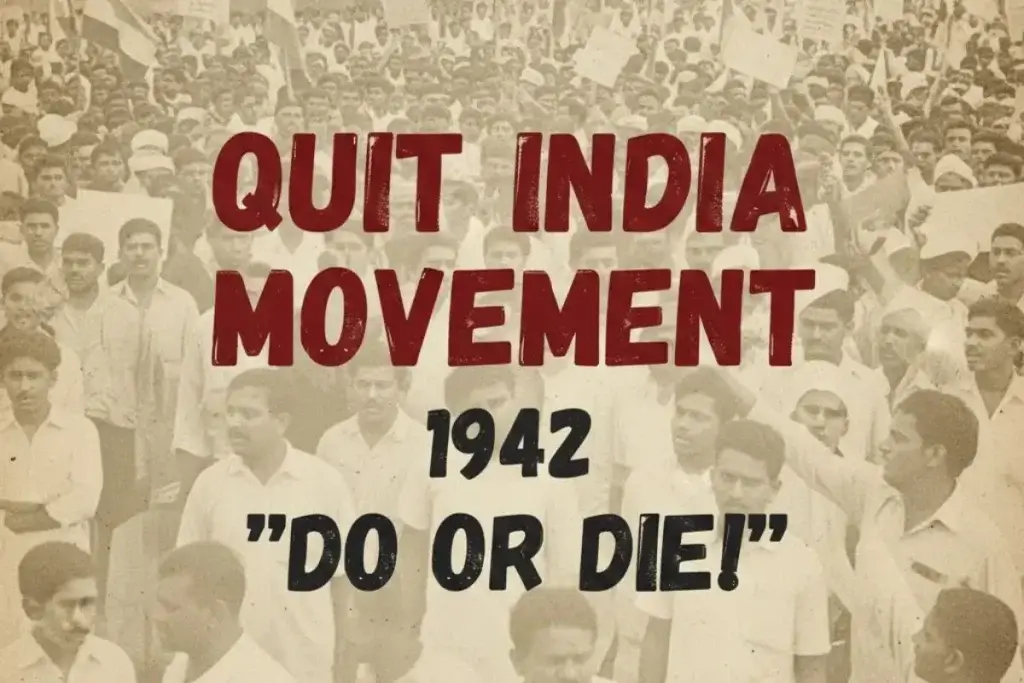
In this blog, we will break down everything you need to know about this movement, from its causes to its impact, in a simple and easy-to-understand way.
What is the Quit India Movement?
The Quit India Movement, also known as the August Kranti (August Revolution), was a civil disobedience movement launched by Mahatma Gandhi on August 8, 1942. Unlike previous movements that were slow and steady, this one was different. It was a direct demand for the immediate end of British rule in India.
Gandhi gave the famous slogan “Do or Die” (Karo ya Maro). This wasn’t just a phrase; it was a call to every Indian to either free the country or die in the attempt to do so.
When was the Quit India Movement Started?
The movement was officially launched during the Bombay session of the All-India Congress Committee.
- Quit India Movement Started in: August 1942.
- Exact Date: August 8, 1942 (The resolution was passed), and the struggle began on August 9, 1942.
- Venue: Gowalia Tank Maidan, Mumbai (now known as August Kranti Maidan).
Causes of the Quit India Movement
Why did the Indians suddenly decide to launch such a massive protest in the middle of World War II? There were several key reasons:
- Failure of the Cripps Mission: The British sent Sir Stafford Cripps to India to negotiate for support in the war. However, he offered “Dominion Status” instead of full independence. Gandhi called this “a post-dated cheque on a crashing bank.”
- World War II Hardships: The war led to a massive rise in the prices of food and essential goods. The common man was suffering, and anger against the British was at an all-time high.
- Fear of Japanese Invasion: Japan was advancing toward India. The Indian leaders felt that if the British left, Japan would have no reason to invade India.
- The “Do or Die” Sentiment: Indians were tired of slow constitutional reforms. They wanted complete freedom (Purna Swaraj) immediately.
Key Features and Spread of the Movement
As soon as the movement was declared, the British government panicked. In the early hours of August 9, they launched “Operation Zero Hour” and arrested almost all top leaders including Gandhi, Nehru, and Sardar Patel.
With no leaders left to guide them, the movement became spontaneous.
- Mass Participation: Students, women, and workers joined the protests.
- Parallel Governments: In places like Ballia (UP), Tamluk (Bengal), and Satara (Maharashtra), people threw out the British and established their own local governments.
- Underground Activities: Leaders like Aruna Asaf Ali, Jayaprakash Narayan, and Ram Manohar Lohia stayed out of jail and led the movement from the shadows. Usha Mehta even started an underground radio station.
Quit India Movement in Hindi (भारत छोड़ो आंदोलन)
For many aspirants, understanding the terminology in Hindi helps in better retention. The movement is widely known as ‘Bharat Chhodon Andolan’. It was the final “big push” that shook the foundations of the British Empire. Even though the British managed to suppress the violence by 1944, they realized that they could no longer rule India against the will of its people.
Quit India Movement MCQs (Practice for Exams)
Testing yourself is the best way to prepare for exams. Try these questions:
भारत छोड़ो आंदोलन (1942) – 100 वस्तुनिष्ठ प्रश्न
Q1. On which date was the Quit India Resolution passed? / भारत छोड़ो प्रस्ताव किस तारीख को पारित किया गया था?
Check Answer
Q2. Who gave the slogan “Do or Die”? / “करो या मरो” का नारा किसने दिया था?
Check Answer
Q3. Which mission’s failure led to the Quit India Movement? / किस मिशन की विफलता के कारण भारत छोड़ो आंदोलन हुआ?
Check Answer
Q4. Where was the Quit India Resolution officially moved? / भारत छोड़ो प्रस्ताव आधिकारिक तौर पर कहाँ पेश किया गया था?
Check Answer
Q5. Who was the British Viceroy during the movement? / आंदोलन के दौरान ब्रिटिश वायसराय कौन था?
Check Answer
Q6. Who is known as the ‘Heroine of 1942’? / 1942 की ‘नायिका’ के रूप में किसे जाना जाता है?
Check Answer
Q7. Which operation was launched by British to arrest Congress leaders? / कांग्रेस नेताओं को गिरफ्तार करने के लिए अंग्रेजों ने कौन सा ऑपरेशन चलाया?
Check Answer
Q8. Where was Mahatma Gandhi imprisoned during the movement? / आंदोलन के दौरान महात्मा गांधी को कहाँ कैद किया गया था?
Check Answer
Q9. Who started the Underground Congress Radio? / अंडरग्राउंड कांग्रेस रेडियो की शुरुआत किसने की?
Check Answer
Q10. Which party did NOT support the Quit India Movement? / किस पार्टी ने भारत छोड़ो आंदोलन का समर्थन नहीं किया?
Check Answer
Q11. Who was the President of INC when the movement started? / आंदोलन शुरू होने पर INC के अध्यक्ष कौन थे?
Check Answer
Q12. In which city is August Kranti Maidan located? / अगस्त क्रांति मैदान किस शहर में स्थित है?
Check Answer
Q13. Who led the parallel government in Ballia? / बलिया में समानांतर सरकार का नेतृत्व किसने किया?
Check Answer
Q14. The parallel government in Satara was known as? / सतारा में समानांतर सरकार को क्या कहा जाता था?
Check Answer
Q15. Which American journalist stayed with Gandhi during the movement? / आंदोलन के दौरान कौन सा अमेरिकी पत्रकार गांधी के साथ रहा?
Check Answer
Q16. C. Rajagopalachari did not participate because? / सी. राजगोपालाचारी ने भाग क्यों नहीं लिया?
Check Answer
Q17. Which movement is called the ‘Spontaneous Revolution’? / किस आंदोलन को ‘स्वतःस्फूर्त क्रांति’ कहा जाता है?
Check Answer
Q18. Who was the Prime Minister of Britain during the movement? / आंदोलन के दौरान ब्रिटेन के प्रधानमंत्री कौन थे?
Check Answer
Q19. Jatiya Sarkar parallel government was formed in? / जातीय सरकार समानांतर सरकार कहाँ बनी थी?
Check Answer
Q20. Who among these was a socialist leader active underground? / इनमें से कौन भूमिगत सक्रिय समाजवादी नेता था?
Check Answer
Q21. Quit India Movement was a response to? / भारत छोड़ो आंदोलन किसकी प्रतिक्रिया थी?
Check Answer
Q22. At which session was Gandhi named the leader of the movement? / किस अधिवेशन में गांधी को आंदोलन का नेता नामित किया गया था?
Check Answer
Q23. Which province saw the maximum violence? / किस प्रांत में सबसे अधिक हिंसा देखी गई?
Check Answer
Q24. Who hoisted the flag at Gowalia Tank on Aug 9? / 9 अगस्त को ग्वालिया टैंक पर झंडा किसने फहराया?
Check Answer
Q25. What was the main reason for the movement’s failure? / आंदोलन की विफलता का मुख्य कारण क्या था?
Check Answer
Q26. Which famous poet returned his titles during the movement? / किस प्रसिद्ध कवि ने आंदोलन के दौरान अपनी उपाधियाँ लौटा दीं?
Check Answer
Q27. Gandhiji undertook a 21-day fast in Feb 1943 to? / गांधीजी ने फरवरी 1943 में 21 दिनों का उपवास क्यों किया?
Check Answer
Q28. After arrest, where was JL Nehru kept? / गिरफ्तारी के बाद जेएल नेहरू को कहाँ रखा गया था?
Check Answer
Q29. Which major industrialist supported the movement? / किस प्रमुख उद्योगपति ने आंदोलन का समर्थन किया?
Check Answer
Q30. Who was the first to give the call “Quit India”? / “भारत छोड़ो” का आह्वान सबसे पहले किसने दिया?
Check Answer
Q31. In which language was the “Quit India” slogan coined? / “भारत छोड़ो” नारा किस भाषा में गढ़ा गया था?
Check Answer
Q32. Which section of society stayed away from the movement? / समाज का कौन सा वर्ग आंदोलन से दूर रहा?
Check Answer
Q33. What was the nature of the Quit India movement? / भारत छोड़ो आंदोलन की प्रकृति क्या थी?
Check Answer
Q34. Who wrote ‘The Discovery of India’ in Ahmednagar Fort? / अहमदनगर किले में ‘द डिस्कवरी ऑफ इंडिया’ किसने लिखी?
Check Answer
Q35. The quit india movement is also known as? / भारत छोड़ो आंदोलन को और क्या कहा जाता है?
Check Answer
Q36. Who escaped from Hazaribagh Jail during the movement? / आंदोलन के दौरान हजारीबाग जेल से कौन भाग निकला था?
Check Answer
Q37. Parallel government in Talcher (Odisha) was led by? / तालचेर (ओडिशा) में समानांतर सरकार का नेतृत्व किसने किया?
Check Answer
Q38. “Post-dated cheque on a crashing bank” was said for? / “डूबते हुए बैंक पर उत्तर-दिनांकित चेक” किसके लिए कहा गया था?
Check Answer
Q39. Which group did ‘Azad Dasta’ belong to? / ‘आजाद दस्ता’ किस समूह से संबंधित था?
Check Answer
Q40. Who formed the ‘Azad Dasta’ in Terai region? / तराई क्षेत्र में ‘आजाद दस्ता’ का गठन किसने किया?
Check Answer
Q41. Which year marks the 80th anniversary of the movement? / किस वर्ष आंदोलन की 80वीं वर्षगांठ मनाई गई?
Check Answer
Q42. Sardar Patel was imprisoned in which jail? / सरदार पटेल को किस जेल में कैद किया गया था?
Check Answer
Q43. The movement started from which ground? / आंदोलन किस मैदान से शुरू हुआ था?
Check Answer
Q44. Who was the Secretary of State for India in 1942? / 1942 में भारत के राज्य सचिव कौन थे?
Check Answer
Q45. Which session of AICC passed the resolution? / AICC के किस अधिवेशन ने प्रस्ताव पारित किया?
Check Answer
Q46. Who draft the Quit India resolution? / भारत छोड़ो प्रस्ताव का मसौदा किसने तैयार किया?
Check Answer
Q47. Which ideology was dominant during underground activities? / भूमिगत गतिविधियों के दौरान कौन सी विचारधारा हावी थी?
Check Answer
Q48. Who provided financial aid to underground workers? / भूमिगत कार्यकर्ताओं को वित्तीय सहायता किसने प्रदान की?
Check Answer
Q49. Which city saw the ‘Great Bombay Textile Strike’? / किस शहर में ‘ग्रेट बॉम्बे टेक्सटाइल स्ट्राइक’ देखी गई?
Check Answer
Q50. Who said “Freedom is not for the timid”? / “स्वतंत्रता डरपोक लोगों के लिए नहीं है” किसने कहा?
Check Answer
Q51. Which country supported British suppression? / किस देश ने ब्रिटिश दमन का समर्थन किया?
Check Answer
Q52. Who was called the “Father of Quit India”? / “भारत छोड़ो के जनक” किसे कहा जाता है?
Check Answer
Q53. Which party called it “Anti-national”? / किस पार्टी ने इसे “राष्ट्र-विरोधी” कहा?
Check Answer
Q54. Where did the movement show the strongest rural base? / आंदोलन ने सबसे मजबूत ग्रामीण आधार कहाँ दिखाया?
Check Answer
Q55. Who used the word “Quit India” first time in print? / प्रिंट में पहली बार “भारत छोड़ो” शब्द का प्रयोग किसने किया?
Check Answer
Q56. Who was the commander-in-chief of British India in 1942? / 1942 में ब्रिटिश भारत के कमांडर-इन-चीफ कौन थे?
Check Answer
Q57. Which statement is true for QIM? / QIM के लिए कौन सा कथन सत्य है?
Check Answer
Q58. Who stood by British during QIM? / QIM के दौरान अंग्रेजों के साथ कौन खड़ा था?
Check Answer
Q59. Gandhi’s imprisonment in Aga Khan Palace lasted for? / आगा खान पैलेस में गांधी की कैद कितने समय तक चली?
Check Answer
Q60. Who organized the ‘Vanar Sena’? / ‘वानर सेना’ का आयोजन किसने किया?
Check Answer
Q61. Who resigned from Viceroy’s Executive Council in protest? / विरोध में वायसराय की कार्यकारी परिषद से किसने इस्तीफा दिया?
Check Answer
Q62. In which state is Tamluk located? / तामलुक किस राज्य में स्थित है?
Check Answer
Q63. Who was the main leader of Satara Prati Sarkar? / सतारा प्रति सरकार के मुख्य नेता कौन थे?
Check Answer
Q64. What was the impact of QIM on British? / ब्रिटिश पर QIM का क्या प्रभाव पड़ा?
Check Answer
Q65. Who seconded the Quit India resolution? / भारत छोड़ो प्रस्ताव का समर्थन किसने किया?
Check Answer
Q66. Which newspaper was banned during the movement? / आंदोलन के दौरान किस समाचार पत्र पर प्रतिबंध लगा दिया गया था?
Check Answer
Q67. Who were ‘Bihari revolutionaries’ leader? / ‘बिहारी क्रांतिकारियों’ के नेता कौन थे?
Check Answer
Q68. Who started the movement on 9th Aug? / 9 अगस्त को आंदोलन की शुरुआत किसने की?
Check Answer
Q69. What was the official status of INC during QIM?
Check Answer
Q70. Who wrote ‘Why Socialism’ during this period? / इस अवधि के दौरान ‘क्यों समाजवाद’ किसने लिखा?
Check Answer
Q71. Which province remained mostly peaceful? / कौन सा प्रांत ज्यादातर शांत रहा?
Check Answer
Q72. Who was the ‘Old Lady’ of the movement? / आंदोलन की ‘बूढ़ी महिला’ कौन थी?
Check Answer
Q73. Matangini Hazra was killed in which district? / मातंगिनी हाजरा किस जिले में मारी गई थीं?
Check Answer
Q74. In 1942, where did women lead the protest? / 1942 में महिलाओं ने विरोध का नेतृत्व कहाँ किया?
Check Answer
Q75. What was the role of INA during QIM? / QIM के दौरान INA की क्या भूमिका थी?
Check Answer
Q76. Who was the ‘Iron Man’ in QIM planning? / QIM योजना में ‘लौह पुरुष’ कौन था?
Check Answer
Q77. Which community supported the movement silently?
Check Answer
Q78. Who called Gandhi “Fascist”? / गांधी को “फासीवादी” किसने कहा?
Check Answer
Q79. Which day is celebrated as Kranti Diwas? / किस दिन को क्रांति दिवस के रूप में मनाया जाता है?
Check Answer
Q80. Who used ‘Do or Die’ for the first time? / ‘करो या मरो’ का प्रयोग पहली बार किसने किया?
Check Answer
Q81. Who was the editor of ‘Harijan’ at that time? / उस समय ‘हरिजन’ के संपादक कौन थे?
Check Answer
Q82. Who became the mayor of Bombay during this era? / इस युग में बॉम्बे का मेयर कौन बना?
Check Answer
Q83. Which group bombed government offices? / किस समूह ने सरकारी कार्यालयों पर बमबारी की?
Check Answer
Q84. Who were the main participants of parallel governments? / समानांतर सरकारों के मुख्य प्रतिभागी कौन थे?
Check Answer
Q85. Why was the movement called ‘leaderless’? / आंदोलन को ‘नेतृत्वहीन’ क्यों कहा गया?
Check Answer
Q86. Which US president supported India’s cause in 1942? / 1942 में किस अमेरिकी राष्ट्रपति ने भारत का समर्थन किया?
Check Answer
Q87. Who wrote ‘The Struggle for Independence’? / ‘स्वतंत्रता के लिए संघर्ष’ किसने लिखा?
Check Answer
Q88. Who lead the movement in Madras? / मद्रास में आंदोलन का नेतृत्व किसने किया?
Check Answer
Q89. What happened to Kasturba Gandhi during QIM? / QIM के दौरान कस्तूरबा गांधी का क्या हुआ?
Check Answer
Q90. Mahadev Desai died in which jail? / महादेव देसाई की मृत्यु किस जेल में हुई?
Check Answer
Q91. How many people died (approx) in QIM? / QIM में लगभग कितने लोग मरे?
Check Answer
Q92. Who was the leader of the ‘Tamluk’ Jatiya Sarkar? / ‘तामलुक’ जातीय सरकार के नेता कौन थे?
Check Answer
Q93. Which slogan was popular besides ‘Quit India’? / ‘भारत छोड़ो’ के अलावा कौन सा नारा लोकप्रिय था?
Check Answer
Q94. Who provided the blueprint for parallel government? / समानांतर सरकार का खाका किसने प्रदान किया?
Check Answer
Q95. Which state observed ‘Martyrs’ Day’ for 1942 heroes? / किस राज्य ने 1942 के नायकों के लिए ‘शहीद दिवस’ मनाया?
Check Answer
Q96. Who among these was the youngest female leader? / इनमें से सबसे कम उम्र की महिला नेता कौन थी?
Check Answer
Q97. Kanaklata Barua belonged to which state? / कनकलता बरुआ किस राज्य से थीं?
Check Answer
Q98. Who gave the slogan “Divide and Quit”? / “विभाजित करो और छोड़ो” का नारा किसने दिया?
Check Answer
Q99. When was Gandhi released from prison? / गांधी को जेल से कब रिहा किया गया?
Check Answer
Q100. What was the ultimate achievement of QIM? / QIM की अंतिम उपलब्धि क्या थी?
Check Answer
Quit India Movement PDFs
If you are looking for detailed notes, we have curated a special Quit India Movement PDF for your revision. This PDF includes:
- Timeline of events.
- List of prominent leaders and their roles.
- Previous year questions from UPSC and State PCS.
Quit India Movement (1942) – Complete Notes PDF
📥 Download PDF NowYou can download it directly from our resources section at Sarkariexampdf.in to keep it handy on your phone or laptop.
Conclusion
The Quit India Movement was the turning point in India’s history. It proved that the Indian people were united and ready to make the ultimate sacrifice for freedom. While it didn’t bring immediate independence in 1942, it ensured that the British exit was inevitable. By 1947, India was finally free.
For any aspirant, mastering this topic is essential. Focus on the dates, the names of local leaders, and the reasons for the failure of the Cripps Mission.
FAQs Related to Quit India Movement
1. Why is the Quit India Movement also known as the August Kranti?
It is called August Kranti because the movement was launched in the month of August (August 8, 1942) at the August Kranti Maidan in Mumbai. It represented a revolutionary (Kranti) shift in the Indian struggle.
2. Was the Quit India Movement a violent movement?
While Gandhi intended it to be non-violent, the arrest of all major leaders led to widespread anger. This resulted in spontaneous acts of violence, such as the bombing of post offices and the cutting of telegraph wires, as the masses reacted without central leadership.
3. Which major political parties did not support the Quit India Movement?
The Muslim League, the Hindu Mahasabha, and the Communist Party of India did not support the movement for various political and ideological reasons, including their stance on World War II.
4. What was the role of women in this movement?
Women played a heroic role. Aruna Asaf Ali hoisted the tricolor at Gowalia Tank Maidan, and Usha Mehta operated the secret Congress Radio, which kept the spirit of the movement alive when the mainstream media was censored.
5. What was the immediate outcome of the movement?
The immediate outcome was massive suppression by the British. Over 100,000 people were arrested. However, it successfully signaled to the British that their time in India was over, leading to post-war negotiations for independence.
- Buddhism Notes PDF: Life and Teachings of Buddha, 50 MCQs

- Jainism Teachings of Mahavira Notes PDF | 50 MCQs
- Satavahanas Dynasty Notes PDF: Rulers, Art & 50 MCQs
- Vijayanagar Empire: History, Founders, Rulers, and Key Facts for Aspirants
- Who is Sher Shah Suri? History, Admin Reforms, and Free PDF MCQs
- Who is Humayun? A Complete Guide for Government Exam Aspirants
- Temple Architecture: Nagara, Dravida & Vesara Styles PDF
- Rashtrakutas Dynasty: Founder, Art, & History Study Notes
- Pallavas of Kanchi: History, Kings, Temples & Study Notes PDF
- Chalukyas of Badami: Founder, Capital, History & PDF Notes
- Quit India Movement: Causes, Date, PDF & Important MCQs
- Battle of Buxar: Main Aspects, Features & MCQs Guide
- 16 Mahajanapadas: Names, Capitals, Map & PDF Download
- Vedic Age: History, Time Period aur 100 Important MCQs PDF
- Indus Valley Civilization Town Planning: Layout & Key Features
- Prehistoric Age: Meaning, Time Period, and Stages in India

Exam Expert & Content Strategist with over 5+ years of experience in the competitive exam sector. I specialize in analyzing government recruitment patterns and simplifying complex syllabi for aspirants. Having helped thousands of students through Sarkari Exam PDF, my mission is to provide authentic, updated, and high-quality study materials for SSC, UPSC, Railways, and Banking exams to help every candidate achieve their career goals.
⚠️ Disclaimer: All study materials, notes, and PDFs shared on SarkariExamPDF.in are provided purely for educational and reference purposes to assist competitive exam aspirants. We do not claim ownership of any original books or official publications. If you are the rightful copyright owner and have any objection regarding any material, please contact us through our Contact Page for immediate removal.