
Constitutional History of India में, Indian Councils Act 1861 एक ऐसा turning point है जिसे समझना बहुत ज़रूरी है. 1857 के Revolt के बाद, Britishers को यह feel हुआ कि Indians के बिना India पर rule करना mushkil है. इसी मजबूरी और strategy का result था यह Act.
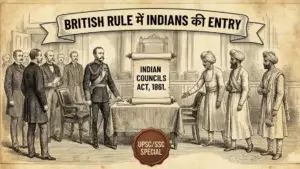
यह Act British Parliament ने 1 August 1861 को pass किया, जिसने Governor-General’s Council के structure को बदल दिया और Indian participation की नींव रखी—भले ही वह बहुत limited था।
Indian Councils Act 1861 Part 1: Act Ki Zaroorat (Reasons for Enactment)
1857 के revolt ने British administration की kuch kamiyaan उजागर कीं. Viceroy Lord Canning ने महसूस किया कि law-making process में Indians को involve करना stability के लिए ज़रूरी है.
| Main Factor (वजह) | Description (विवरण) | Exam Point (परीक्षा के लिए) |
| 1857 Revolt Ka Asar | Revolt ने साबित कर दिया कि Indian feelings और needs जाने बिना law बनाना dangerous है। | British Crown को Indian co-operation की value समझ आई। |
| Decentralization Ki Maang | Charter Act 1833 ने Bombay और Madras की law-making power छीन ली थी (Centralization). अब power को wapas provinces को देना ज़रूरी था। | Legislative Devolution की शुरुआत। |
| Administrative Efficiency | Viceroy की Executive Council का काम बहुत slow था, क्योंकि हर paper पूरे Council को pass करना पड़ता था। | Portfolio System (Cabinet System का base) की ज़रूरत पड़ी। |
Indian Councils Act 1861 Part 2: Key Provisions (Mukhya Baatein/Provisions)
इस Act ने Indian administration में तीन सबसे बड़े बदलाव लाए:
1. Indians Ka Shamil Hona (Inclusion of Indians)
- Rule: Viceroy को यह power मिली कि वह Legislative Council में 6 से 12 तक “Additional Members” nominate कर सकता है।
- Indian Non-Officials: In additional members में से कम से कम आधे (Half) members non-official होने चाहिए थे, और Viceroy इन्हें Indians में से nominate कर सकते थे।
- First Nominees (1862): Lord Canning ने पहली बार जिन तीन Indians को nominate किया, उनके नाम competitive exams के लिए super-important हैं:
- Raja of Benaras
- Maharaja of Patiala
- Sir Dinkar Rao
2. Portfolio System (विभागों का बंटवारा)
- Introduction: यह system Lord Canning ने 1859 में शुरू किया था, जिसे 1861 Act ने legalize कर दिया।
- Meaning: Executive Council के हर member को एक specific department (जैसे Home, Revenue, Military, Finance, Law) का charge दिया गया।
- Benefit: इससे administrative efficiency बढ़ी क्योंकि member अपने department के final orders ख़ुद issue कर सकता था। यह today’s Cabinet System का foundation था।
3. Power Ka Vaapas Milna (Decentralization/Devolution)
- Provincial Powers: Bombay और Madras प्रेसीडेंसियों की law-making powers वापस restore कर दी गईं। (जो 1833 में छीनी गई थीं।)
- New Councils: Viceroy को Bengal, North-Western Provinces, और Punjab जैसी other provinces में भी new Legislative Councils बनाने की power मिली।
4. Viceroy Ki Supreme Power
- Veto Power: Viceroy के पास किसी भी bill को veto करने (खारिज करने) की final power थी।
- Ordinance Power: Emergency (आपातकाल) के समय, Viceroy Legislative Council की सलाह लिए बिना भी Ordinance (अध्यादेश) जारी कर सकता था। इस Ordinance की validity 6 महीने तक होती थी। (Today’s Article 123 in Indian Constitution is similar to this.)
Indian Councils Act 1861 Part 3: Significance and Drawbacks (Mahatva aur Kamiyaan)
| Aspect (पहलू) | Significance (महत्व) | Drawbacks (कमीयाँ) |
| Law-Making | Indians को पहली बार law-making process में associate किया गया। | Inclusion केवल Nomination से था, Election से नहीं। यह Representation elite class तक सीमित था। |
| Administration | Portfolio System ने modern Cabinet government की नींव रखी। | Legislative Council का role purely advisory था। Members के पास real power या vote नहीं था। |
| Constitutional | Legislative Devolution (Decentralization) की शुरुआत हुई, जो later चलकर provincial autonomy का base बनी। | Council Budget या Executive actions पर कोई discussion नहीं कर सकती थी। |
| Authority | – | Viceroy की Veto और Ordinance power ने Britishers की supreme authority को maintain रखा। |
Indian Councils Act 1861 Quiz
ज़रूर, आपके ब्लॉग पोस्ट की वेबसाइट गति (website speed) को बनाए रखने के लिए, यहाँ Indian Councils Act 1861 पर आधारित 30 MCQs का lightweight HTML कोड दिया गया है। यह कोड पिछले क्विज़ के समान ही structure और minimal CSS/JavaScript (inline Script) का उपयोग करता है।“`html📝 Indian Councils Act 1861: 30 Important MCQs
Instructions: नीचे दिए गए सभी प्रश्न Indian Councils Act 1861 पर आधारित हैं और Competitive Exams के लिए महत्वपूर्ण हैं।
Category 1: Basic Facts and History
Category 2: Key Provisions and Administration
Category 3: Indian Nominees and Outcomes
Category 4: Deep Concepts and Legacy
Category 5: Comparative and Advanced
FAQs for Competitive Exams (महत्वपूर्ण प्रश्न)
Q1. Indian Councils Act 1861 किस Viceroy के time में पास हुआ था?
A. Lord Canning (1856-1862)
Q2. इस Act का सबसे महत्वपूर्ण प्रावधान (provision) क्या था?
A. Law-making process में Indians को nominate करके शामिल करना।
Q3. ‘Portfolio System’ किसने और कब शुरू किया था?
A. Lord Canning ने 1859 में शुरू किया था, जिसे 1861 Act द्वारा legalize किया गया।
Q4. इस Act के तहत किन तीन भारतीयों को पहली बार nominate किया गया था?
A. Raja of Benaras, Maharaja of Patiala, और Sir Dinkar Rao.
Q5. किस Act ने Bombay और Madras की law-making power वापस restore की?
A. Indian Councils Act, 1861. (इससे पहले Charter Act 1833 ने power छीनी थी।)
Q6. Viceroy के Ordinance की maximum validity period कितनी थी?
A. 6 महीने (Six Months).
Indian Councils Act 1861 colonial governance की मजबूरी और strategy का एक complex example है। इसने भले ही भारतीयों को limited role दिया, लेकिन Decentralization और Portfolio System की नींव रखकर यह Act हमारे Constitutional History की एक key stage बना। अब जब आपने Act की सभी provisions, significance, और limitations को अच्छी तरह समझ लिया है, तो यह आपकी turn है! अपनी knowledge को test करने और परीक्षा के लिए तैयार होने के लिए, हमारे special 30 MCQs को solve करें। इन MCQs को बार-बार attempt करें, ताकि Act से जुड़ा कोई भी प्रश्न आपसे न छूटे। Sarkariexampdf.in पर बने रहें और अपनी सफलता की राह आसान करें!
- Aptitude Notes PDF: 28 Chapter-Wise Quantitative Aptitude Topics

- SSC GD Practice Set PDF: 15 Set-Wise Mock Papers & Answers
- SSC GD Maths Practice Set PDF: 29 Quantitative Aptitude Sets
- SSC GD Economics Questions: Chapter-Wise MCQs With Answers & PDF
- SSC GD Polity Previous Year Questions: Year-Wise Solved Papers PDF
- SSC GD Polity Questions & Notes PDF: Chapter-Wise Study Material
- SSC GD General Science Questions: Chapter-Wise MCQs & PDF Download
- SSC GD Previous Year Question Papers & Study Material PDF – Download Free
- Notes on Glass: Composition, Types and Uses PDF for SSC & Railway Exams – Download Free
- Chemistry Notes on Oxidation and Reduction PDF – SSC & Railway Exams
- Chemistry Notes on Chemical Bonding PDF – SSC & Railway Exams
- List of Chemical Formulas and their Common Names PDF – SSC & Railway
- Notes on Atomic Models and Quantum Numbers PDF – SSC & Railway Exams
- Properties of Metals Non Metals and Metalloids PDF – SSC & Railway Exams
- Compounds of the Carbon and Hydrogen PDF – SSC & Railway Exams
- Notes on Periodic Table & Classification of Elements PDF
- Notes on Important Fuels and their Composition PDF – SSC & Railway Exams
- Notes on Alloy And Their Composition PDF for SSC & Railway Exams
- Chemistry Notes on Acids and Base PDF for SSC & Railway Exams
- Chemistry Notes PDF for RRB NTPC, SSC CHSL, SSC CGL Exams
- Complete Reasoning Notes PDF in Hindi for SSC CGL, RRB NTPC & State Exams
- Static GK for Government Exams – Topic-Wise Notes & Previous Year Questions
- Complete Topic Wise Static GK PDF List For All Competitive Exams
- Static GK Topic Wise PDF Download 53 Core Topics for Competitive Exams

- Soils of India Guide: Notes & 100 Practice Questions

- Temple Architecture: Nagara, Dravida & Vesara Styles PDF
- Rashtrakutas Dynasty: Founder, Art, & History Study Notes
- Charter Act 1833: Main Aspects, Features & MCQs Guide
- Computer Basics Mcqs for Government Exams Notes+100 MCQs
- Geography Notes – Complete Guide for Competitive Exams




Exam Expert & Content Strategist with over 5+ years of experience in the competitive exam sector. I specialize in analyzing government recruitment patterns and simplifying complex syllabi for aspirants. Having helped thousands of students through Sarkari Exam PDF, my mission is to provide authentic, updated, and high-quality study materials for SSC, UPSC, Railways, and Banking exams to help every candidate achieve their career goals.
⚠️ Disclaimer: All study materials, notes, and PDFs shared on SarkariExamPDF.in are provided purely for educational and reference purposes to assist competitive exam aspirants. We do not claim ownership of any original books or official publications. If you are the rightful copyright owner and have any objection regarding any material, please contact us through our Contact Page for immediate removal.