
Hello doston! Agar aap UPSC, SSC, ya kisi bhi State PSC exam ki taiyari kar rahe hain, toh Indian History mein Vedic Age ek aisa topic hai jahan se har saal sawal puche jate hain. Aaj ke is article mein hum the Vedic ko itne asan tarike se samjhenge ki aapko dobara kabhi ratta maarne ki zaroorat nahi padegi.
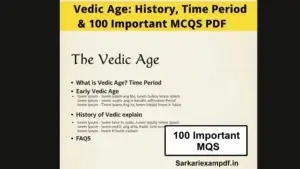
What is Vedic Age?
Asan shabdon mein kahein toh, Indus Valley Civilization (Sindhu Ghati Sabhyata) ke khatam hone ke baad Bharat mein jis nayi sabhyata ka janm hua, usey hum Vedic-Age kehte hain.
Iska naam ‘Vedas’ par rakha gaya hai kyunki is period ki saari jankari humein Charon Vedon (Rigveda, Samaveda, Yajurveda, aur Atharvaveda) se milti hai. Is sabhyata ke nirmata Aryans ko maana jata hai.
What is Vedic Age Time Period?
History mein kisi bhi period ko samajhne ke liye uska samay jaanna zaroori hai. Vedic-Age time period ko do bhagon mein baanta gaya hai:
- Early Vedic-Age (Rigvedic Period): 1500 BC se 1000 BC tak.
- Later Vedic-Age: 1000 BC se 600 BC tak.
What is Early Vedic Age? (1500 BC – 1000 BC)
Early Vedic-Age wo samay tha jab sirf ‘Rigveda’ ki rachna hui thi. Is samay Aryans ‘Sapta-Sindhu’ (saat nadiyon ki jagah) region mein rehte the.
- Is samay ki economy ‘Pastoral’ thi, matlab log pashupalan (cattle rearing) par zyada focus karte the.
- Gai (Cow) ko sabse keemti sampatti maana jata tha.
- Political system mein ‘Sabha’ aur ‘Samiti’ jaise democratic organizations hote the.
What is Later Vedic Age? (1000 BC – 600 BC)
Jab Aryans ganga ghati (Gangetic plains) ki taraf badhne lage, toh usey Later Vedic-Age kaha gaya. Is period mein baaki ke teen Ved (Samaveda, Yajurveda, Atharvaveda) likhe gaye.
- Is period mein ‘Iron’ (loha) ki khoj hui, jisne kheti (Agriculture) ko bahut asan bana diya.
- Ab log ek jagah tik kar rehne lage aur chhote-chhote ‘Janapadas’ banne shuru huye.
- Caste system (Varna system) thoda sakht (rigid) ho gaya.
History of Vedic Age aur Iski Theory
History of Vedic ko lekar alag-alag historians ki alag-alag Theory of Vedic rahi hai. Sabse popular theory Max Mueller ki hai, jinka manna tha ki Aryans Central Asia se aaye the. Wahi kuch log kehte hain ki wo Arctic region ya Tibet se aaye the. Lekin zyadatar saboot ye dikhate hain ki Aryans ne Bharat mein ek rural (gramin) sabhyata ko janm diya, jo Indus Valley ki urban sabhyata se bilkul alag thi.
Vedic Age UPSC Perspective
Vedic UPSC ke liye isliye important hai kyunki ye hamare culture ka base hai. UPSC aspirants ko in points par focus karna chahiye:
- Religion: Indra, Agni aur Varuna jaise devtaon ki pooja.
- Philosophy: Upanishads aur Vedangas ka gyan.
- Society: Women ki position mein badlav (Early vs Later).
Vedic Age PDF Notes
Aapki padhai ko asan banane ke liye niche humne Vedic pdf ke top resources link kiye hain:
- Ancient History Handwritten Notes PDF
- Vedic-Age Short Revision One-Liners
- UPSC Standard NCERT Summary (Class 6th & 12th)
Vedic Age 100 MCQ Practice Set
Exams mein full marks pane ke liye mcq practice karna bahut zaroori hai. Niche kuch sample questions diye gaye hain:
- Rigveda mein kis nadi ka sabse zyada zikr hai? (Ans: Sindhu)
- Satyameva Jayate kahan se liya gaya hai? (Ans: Mundaka Upanishad)
- Vedic mein ‘Gavishti’ shabd ka kya matlab tha? (Ans: Search for cows)
Vedic History: Top 100 MCQs
Q1. Which Veda is considered the oldest? / कौन-सा वेद सबसे प्राचीन माना जाता है?
Check Answer
Q2. The Early Vedic society was primarily / प्रारंभिक वैदिक समाज मुख्य रूप से किस पर आधारित था?
Check Answer
Q3. Which river is most frequently mentioned in Rigveda? / ऋग्वेद में किस नदी का सर्वाधिक उल्लेख है?
Check Answer
Q4. Which Vedic text contains spells and charms? / कौन-सा वैदिक ग्रंथ मंत्र और जादू-टोना शामिल करता है?
Check Answer
Q5. The term ‘Purusha Sukta’ occurs in / “पुरुष सूक्त” किसमें पाया जाता है?
Check Answer
Q6. Which was the most important assembly in Early Vedic polity?
Check Answer
Q7. In Later Vedic period, which sacrifice enhanced the king’s power?
Check Answer
Q8. The word “Gotra” (clan system) emerged in which period?
Check Answer
Q9. Which metal was unknown to Rigvedic people?
Check Answer
Q10. Who was the most important deity in Rigveda?
Check Answer
Q11. The Vedic economy mainly depended on:
Check Answer
Q12. Which Later Vedic text elaborates rituals?
Check Answer
Q13. In Rigvedic society, the term ‘Nishka’ was used for:
Check Answer
Q14. Which Later Vedic king performed Ashvamedha Yajna?
Check Answer
Q15. Which assembly disappeared in Later Vedic period?
Check Answer
Q16. The “Gayatri Mantra” is addressed to which deity?
Check Answer
Q17. The Later Vedic society was divided into:
Check Answer
Q18. Which Vedic goddess is associated with dawn?
Check Answer
Q19. Which Upanishad contains the dialogue of Nachiketa?
Check Answer
Q20. The Later Vedic people first used which coin-like unit?
Check Answer
Q21. Who composed Rigveda hymns?
Check Answer
Q22. In which Veda Soma is frequently mentioned?
Check Answer
Q23. Which Varna was associated with trade and agriculture?
Check Answer
Q24. Which animal was most important in Rigvedic rituals?
Check Answer
Q25. Who among the following was a Later Vedic philosopher-king?
Check Answer
Q26. The “Brahmacharya” stage belonged to:
Check Answer
Q27. Which Vedic text contains philosophical discussions?
Check Answer
Q28. The famous dialogue of Gargi with Yajnavalkya is in:
Check Answer
Q29. Which river is called Naditama (best river) in Rigveda?
Check Answer
Q30. Which Later Vedic ritual was meant for royal consecration?
Check Answer
Q31. The term ‘Rajasuya’ in Later Vedic period refers to:
Check Answer
Q32. Which Later Vedic ritual involved symbolic horse sacrifice?
Check Answer
Q33. Who among the following women participated in Vedic debates?
Check Answer
Q34. The Later Vedic economy showed the first evidence of:
Check Answer
Q35. Which Rigvedic deity was called “Prajapati” in Later Vedic age?
Check Answer
Q36. Which assembly lost political significance in Later Vedic period?
Check Answer
Q37. The Brahmanas are primarily concerned with:
Check Answer
Q38. The “Puru” and “Bharata” tribes later merged to form:
Check Answer
Q39. The term ‘Sangrihitri’ in Later Vedic society referred to:
Check Answer
Q40. Which text contains detailed explanation of Yajnas?
Check Answer
Q41. Which Later Vedic kingdom was known for Janaka’s rule?
Check Answer
Q42. Which ritual was connected with the king’s victory in chariot race?
Check Answer
Q43. In which Vedic period Varna system became rigid?
Check Answer
Q44. The Satapatha Brahmana is associated with:
Check Answer
Q45. The Later Vedic people used iron called:
Check Answer
Q46. Who was called “Vrtraslayer” in Rigveda?
Check Answer
Q47. In Later Vedic polity, the king claimed divine status through:
Check Answer
Q48. The Rigvedic rivers are collectively called:
Check Answer
Q49. Who authored “Aitareya Brahmana”?
Check Answer
Q50. Which deity gradually became supreme in Later Vedic age?
Check Answer
Q51. The king performed “Rajasuya Yajna” to:
Check Answer
Q52. The Later Vedic priest responsible for singing hymns was:
Check Answer
Q53. The Atharvaveda is also known as:
Check Answer
Q54. Which Vedic text is closest to Upanishads in thought?
Check Answer
Q55. Which assembly represented the whole tribe?
Check Answer
Q56. The Later Vedic society introduced the concept of:
Check Answer
Q57. The Rigvedic Aryans worshipped primarily:
Check Answer
Q58. The “Battle of Ten Kings” is described in:
Check Answer
Q59. Which Upanishad belongs to Atharvaveda?
Check Answer
Q60. Who among the following composed hymns in Rigveda?
Check Answer
Q61. Which king is associated with Videha and philosopher Yajnavalkya?
Check Answer
Q62. The Later Vedic king was assisted by:
Check Answer
Q63. In Rigveda, the word “Brahma” originally meant:
Check Answer
Q64. The Upanishads are also known as:
Check Answer
Q65. Which Later Vedic ritual was considered a game of dice?
Check Answer
Q66. The main occupation of Early Vedic Aryans was:
Check Answer
Q67. The Later Vedic term “Sresthin” referred to:
Check Answer
Q68. The Chandogya Upanishad is associated with:
Check Answer
Q69. The famous hymn ‘Nasadiya Sukta’ deals with:
Check Answer
Q70. Which Vedic text is considered a bridge between Brahmanas and Upanishads?
Check Answer
Q71. The word “Arya” in Rigveda refers to:
Check Answer
Q72. Who was considered as protector of cosmic order in Rigveda?
Check Answer
Q73. Which Later Vedic ritual involved donation of cows and gold?
Check Answer
Q74. The Kuru kingdom was formed by merger of:
Check Answer
Q75. Which Upanishad gives the earliest reference of monism (Advaita)?
Check Answer
Q76. Which deity later became associated with universal soul (Paramatma)?
Check Answer
Q77. The Early Vedic term “Gavishti” means:
Check Answer
Q78. Who among the following women is associated with philosophical thought in Vedic era?
Check Answer
Q79. The word “Ayas” in Rigveda referred to:
Check Answer
Q80. Which Later Vedic kingdom was politically most powerful?
Check Answer
Q81. The Later Vedic society’s four stages of life (Ashramas) began with:
Check Answer
Q82. Who among the following challenged Brahmanical orthodoxy in Vedic society?
Check Answer
Q83. Which economic transition marks Later Vedic age?
Check Answer
Q84. In Later Vedic polity, Sabha came to represent:
Check Answer
Q85. Which sacrifice was believed to grant universal sovereignty to the king?
Check Answer
Q86. The Later Vedic term “Bhaga” referred to:
Check Answer
Q87. The ritual “Gomedha” was symbolic sacrifice of:
Check Answer
Q88. Which deity’s importance declined in Later Vedic period?
Check Answer
Q89. Which philosophical concept developed strongly in Upanishads?
Check Answer
Q90. The earliest reference to Varna hierarchy is found in:
Check Answer
Q91. Which Vedic text discusses forest-dwelling hermits (Vanaprastha)?
Check Answer
Q92. The Later Vedic king proved supremacy through which ritual?
Check Answer
Q93. The term “Grama” in Later Vedic period referred to:
Check Answer
Q94. The Rigvedic hymn “Purusha Sukta” describes:
Check Answer
Q95. Who is regarded as the author of “Brihadaranyaka Upanishad”?
Check Answer
Q96. The Later Vedic king collected revenue primarily as:
Check Answer
Q97. The Later Vedic polity became more:
Check Answer
Q98. Who gave the earliest philosophical explanation of “Neti, Neti”?
Check Answer
Q99. Which Later Vedic kingdom was political and ritual center?
Check Answer
Q100. The concept of “Rita” in Rigveda later evolved into:
Check Answer
Conclusion
Doston, Vedic-Age hamari history ka wo sunhera panna hai jisne Bharat ko uske sanskar aur gyan diya. Early Vedic ki azadi se lekar Later Vedic ki technology (Iron) tak, humne bahut kuch seekha. Umeed hai ye guide aapke exams mein kaam aayegi.
free Pdf Download – sarkariexampdf.in
FAQs Vedic Age
What is Vedic age?
Vedic wo samay hai jab Bharat mein Vedas ki rachna hui aur Aryan sabhyata ka vikas hua.
What is Vedic age explain?
Ise hum ek rural sabhyata ke roop mein explain kar sakte hain jo 1500 BC se 600 BC tak rahi aur jiska main source ‘Vedas’ hain.
What do you mean by Vedic age?
Iska matlab hai “Vedas ka Yug”. Ye Bharat ke ancient history ka ek mahatvapurn hissa hai.
What are the archaeological sources for the Vedic age?
Painted Grey Ware (PGW), Ochre Coloured Pottery (OCP) aur lohe ke auzaar iske main archaeological sources hain.
What is the meaning of Vedic age?
Veda shabd ‘Vid’ se bana hai jiska matlab hota hai “Gyan” (Knowledge). Isliye ise gyan ka yug bhi kehte hain.
Who was the head of the kingdom in the Vedic age?
Kingdom ke head ko ‘Rajan’ kaha jata tha, jo tribe ka protector hota tha.
How did towns and cities emerge in the Vedic age?
Later Vedic mein lohe (Iron) ke use aur surplus agriculture ki wajah se chhote gaon Janapadas mein badle, jisne aage chalkar shehron ko janm diya.
What is the position of women in Rig Vedic age?
Early Vedic ya Rig Vedic mein women ki position bahut achhi thi. Wo ‘Sabha’ mein ja sakti thi aur shiksha (education) le sakti thi (e.g., Lopamudra, Ghosha).
What position did the women enjoy in the Vedic age?
Early period mein unhe barabar ka darja tha, lekin Later Vedic mein unki halat thodi kharab hui aur unhe political assemblies se door rakha jane laga.
What is the time period of Vedic age?
Iska total time period 1500 BC se 600 BC tak maana jata hai.
Why is the Vedic age important?
Ye isliye important hai kyunki hamara dharam, sanskriti, caste system aur social structure isi period se shuru hua tha.
- Vijayanagar Empire: History, Founders, Rulers, and Key Facts for Aspirants

- Who is Sher Shah Suri? History, Admin Reforms, and Free PDF MCQs
- Who is Humayun? A Complete Guide for Government Exam Aspirants
- Temple Architecture: Nagara, Dravida & Vesara Styles PDF
- Rashtrakutas Dynasty: Founder, Art, & History Study Notes
- Pallavas of Kanchi: History, Kings, Temples & Study Notes PDF
- Chalukyas of Badami: Founder, Capital, History & PDF Notes
- Quit India Movement: Causes, Date, PDF & Important MCQs
- Battle of Buxar: Main Aspects, Features & MCQs Guide
- 16 Mahajanapadas: Names, Capitals, Map & PDF Download

- Vedic Age: History, Time Period aur 100 Important MCQs PDF
- Indus Valley Civilization Town Planning: Layout & Key Features
- Prehistoric Age: Meaning, Time Period, and Stages in India


Exam Expert & Content Strategist with over 5+ years of experience in the competitive exam sector. I specialize in analyzing government recruitment patterns and simplifying complex syllabi for aspirants. Having helped thousands of students through Sarkari Exam PDF, my mission is to provide authentic, updated, and high-quality study materials for SSC, UPSC, Railways, and Banking exams to help every candidate achieve their career goals.
⚠️ Disclaimer: All study materials, notes, and PDFs shared on SarkariExamPDF.in are provided purely for educational and reference purposes to assist competitive exam aspirants. We do not claim ownership of any original books or official publications. If you are the rightful copyright owner and have any objection regarding any material, please contact us through our Contact Page for immediate removal.