
If you are a serious aspirant, you know that the transition from a “trading company” to a “ruling power” is a favorite topic for examiners. The Battle of Buxar is the heart of this transition.
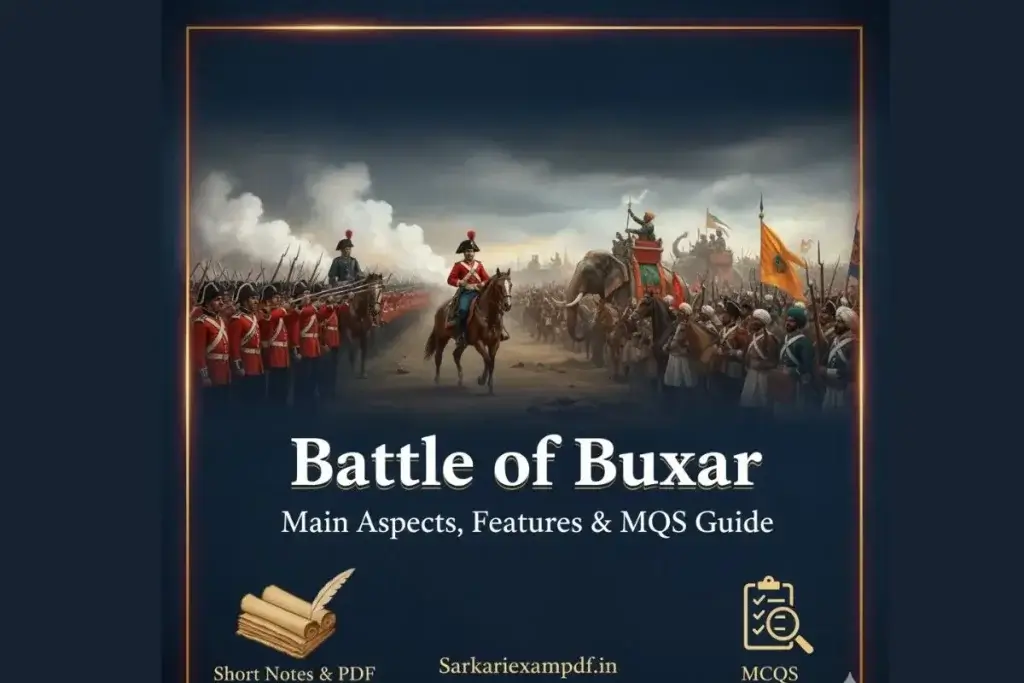
What is the Battle of Buxar?
The Battle of Buxar was a conflict fought in 1764 that transformed the British East India Company (EIC) from a commercial entity into a political giant. Unlike the Battle of Plassey (1757), which was won largely through conspiracy and betrayal, the Battle of Buxar was a result of superior military skill and discipline.
When did the Battle of Buxar take place?
The battle took place on October 22, 1764. It was fought at Buxar, a small but strategically fortified town in Bihar, located on the banks of the Ganges river.
Battle of Buxar was fought between: The Main Participants
To understand the battle of buxar short note, you must know the two sides involved. It was a classic “All-Star” team of Indian rulers against the organized British forces.
| Side | Key Leaders |
| British East India Company | Major Hector Munro |
| Combined Indian Alliance | 1. Mir Qasim (Nawab of Bengal) 2. Shuja-ud-Daula (Nawab of Awadh) 3. Shah Alam II (Mughal Emperor) |
Aspirant’s Note: Even though the Indian alliance had nearly 40,000–60,000 soldiers against the British force of only about 7,000, the British won due to better coordination and modern artillery.
Explain the Main Aspects of Battle of Buxar
1. The Conflict with Mir Qasim
After the Battle of Plassey, the British installed Mir Jafar as a puppet Nawab. When he failed to meet their endless financial demands, they replaced him with his son-in-law, Mir Qasim. However, Mir Qasim was independent-minded. He shifted his capital to Munger and tried to modernize his army.
2. The Misuse of Dastaks (Trade Permits)
The British were misusing “Dastaks” (duty-free trade passes), which hurt the local Indian merchants. Mir Qasim decided to abolish all duties for everyone to level the playing field. This angered the British, leading to a series of smaller battles and eventually the big clash at Buxar.
3. The Treaty of Allahabad (1765)
The most important result of the battle was the Treaty of Allahabad.
- The Mughal Emperor granted Diwani Rights (the right to collect revenue) of Bengal, Bihar, and Odisha to the Company.
- This meant the British now controlled the money of India’s richest province.
What were the Effects of Battle of Buxar?
The results of the battle of buxar changed India forever:
- Establishment of Dual Government: Robert Clive introduced the “Dual System” in Bengal. The Company had the power (revenue), but the Nawab had the responsibility (administration).
- Political Dominance: The British became the real masters of Northern India. The Mughal Emperor became a mere “rubber stamp” or pensioner of the Company.
- Buffer State: Awadh was turned into a “buffer state” to protect British territories from Maratha and Afghan invasions.
- Economic Drain: This marked the beginning of the massive wealth drain from India to Britain.
Battle of Buxar MCQs for Practice
Battle of Buxar (1764)
100 Important Questions | महत्वपूर्ण 100 प्रश्नोत्तर
1. The Battle of Buxar was fought in which year? / बक्सर का युद्ध किस वर्ष हुआ था?
Check Answer
Answer: C) 1764
2. Who led the British forces in the Battle of Buxar? / बक्सर की लड़ाई में ब्रिटिश सेना का नेतृत्व किसने किया?
Check Answer
Answer: B) Hector Munro
3. Which Nawab of Bengal was part of the Buxar alliance? / बक्सर गठबंधन में बंगाल का कौन सा नवाब शामिल था?
Check Answer
Answer: B) Mir Qasim
4. Which Mughal emperor participated in the Battle of Buxar? / बक्सर की लड़ाई में कौन सा मुगल सम्राट शामिल था?
Check Answer
Answer: C) Shah Alam II
5. Who was the Nawab of Awadh allied in the Battle of Buxar? / बक्सर की लड़ाई में अवध का नवाब कौन था?
Check Answer
Answer: B) Shuja-ud-Daula
6. Where was the Battle of Buxar fought? / बक्सर का युद्ध कहाँ लड़ा गया था?
Check Answer
Answer: B) Bihar
7. What was the strength of the allied Indian forces at Buxar? / बक्सर में भारतीय गठबंधन सेना की संख्या कितनी थी?
Check Answer
Answer: C) 40,000
8. What was the strength of the British army at Buxar? / बक्सर में ब्रिटिश सेना की संख्या कितनी थी?
Check Answer
Answer: C) 7,000
9. Which treaty followed the Battle of Buxar? / बक्सर के युद्ध के बाद कौन सी संधि हुई?
Check Answer
Answer: B) Treaty of Allahabad
10. Through the Treaty of Allahabad, the Company received Diwani rights of which provinces? / इलाहाबाद की संधि से कंपनी को किन प्रांतों की दीवानी मिली?
Check Answer
Answer: B) Bengal, Bihar, Orissa
11. Who was the successor of Mir Jafar replaced before Buxar? / बक्सर से पहले मीर जाफर की जगह किसे नवाब बनाया गया था?
Check Answer
Answer: A) Mir Qasim
12. The main cause of conflict between Mir Qasim and the Company was? / मीर क़ासिम और कंपनी के बीच संघर्ष का मुख्य कारण क्या था?
Check Answer
Answer: B) Misuse of dastaks (trade privileges)
13. Who abolished internal duties in Bengal to counter Company’s privileges? / कंपनी के विशेषाधिकारों का मुकाबला करने के लिए किसने आंतरिक कर समाप्त किए?
Check Answer
Answer: A) Mir Qasim
14. The Battle of Buxar was fought near which river? / बक्सर की लड़ाई किस नदी के किनारे लड़ी गई?
Check Answer
Answer: A) Ganga
15. Which Mughal prince later became Shah Alam II after Buxar? / बक्सर के बाद कौन सा मुगल शहजादा शाह आलम II बना?
Check Answer
Answer: A) Ali Gauhar
16. Which British commander inflicted a decisive defeat at Buxar? / बक्सर में निर्णायक हार किस ब्रिटिश सेनापति ने दी?
Check Answer
Answer: A) Hector Munro
17. Who was the Nawab of Awadh defeated at Buxar? / बक्सर में पराजित अवध का नवाब कौन था?
Check Answer
Answer: B) Shuja-ud-Daula
18. The combined Indian forces at Buxar were estimated at— / बक्सर में भारतीय संयुक्त सेना की अनुमानित संख्या कितनी थी?
Check Answer
Answer: C) 40,000
19. The British casualties at Buxar were approximately— / बक्सर में ब्रिटिश हताहत लगभग कितने थे?
Check Answer
Answer: B) 847
20. Which Mughal Emperor signed the Treaty of Allahabad (1765)? / इलाहाबाद संधि (1765) किस मुगल सम्राट ने की?
Check Answer
Answer: C) Shah Alam II
21. The Treaty of Allahabad granted Diwani rights of— / इलाहाबाद संधि से कंपनी को किन प्रांतों की दीवानी मिली?
Check Answer
Answer: C) Bengal, Bihar & Orissa
22. Who mediated between Shuja-ud-Daula and Company after Buxar? / बक्सर के बाद शुजा-उद-दौला और कंपनी के बीच मध्यस्थ कौन था?
Check Answer
Answer: A) Robert Clive
23. What was the immediate result of Buxar for Mughal Emperor? / बक्सर के बाद मुगल सम्राट के लिए तात्कालिक परिणाम क्या था?
Check Answer
Answer: B) Became pensioner of Company
24. Who shifted Bengal’s capital from Murshidabad to Munger before Buxar? / बक्सर से पहले किसने बंगाल की राजधानी मुर्शिदाबाद से मुंगेर स्थानांतरित की?
Check Answer
Answer: A) Mir Qasim
25. Which historian called Buxar “the real foundation of British Empire in India”? / किस इतिहासकार ने बक्सर को “भारत में ब्रिटिश साम्राज्य की असली नींव” कहा?
Check Answer
Answer: B) John Seeley
26. Which Indian power lost political influence permanently after Buxar? / बक्सर के बाद कौन सी भारतीय शक्ति स्थायी रूप से कमजोर हो गई?
Check Answer
Answer: D) All of the above
27. Who succeeded Shuja-ud-Daula as Nawab of Awadh later? / शुजा-उद-दौला के बाद अवध का नवाब कौन बना?
Check Answer
Answer: B) Asaf-ud-Daula
28. Who was the British Governor of Bengal when Treaty of Allahabad was signed? / इलाहाबाद संधि के समय बंगाल का ब्रिटिश गवर्नर कौन था?
Check Answer
Answer: B) Robert Clive
29. What was the war indemnity imposed on Shuja-ud-Daula after Buxar? / बक्सर के बाद शुजा-उद-दौला पर कितना युद्ध-क्षतिपूर्ति लगाया गया?
Check Answer
Answer: C) ₹50 lakh
30. Which Mughal Emperor later issued farman granting Diwani rights? / किस मुगल सम्राट ने दीवानी अधिकार का फ़रमान जारी किया?
Check Answer
Answer: B) Shah Alam II
31. Who was the finance minister of Mir Qasim during reforms? / मीर क़ासिम के सुधारों के समय वित्तमंत्री कौन था?
Check Answer
Answer: C) Ghulam Husain
32. The Mughal Emperor after Buxar shifted residence to— / बक्सर के बाद मुगल सम्राट कहाँ रहने लगे?
Check Answer
Answer: B) Allahabad Fort
33. Who reorganized the Bengal army on European lines before Buxar? / बक्सर से पहले बंगाल की सेना को यूरोपीय ढंग से किसने पुनर्गठित किया?
Check Answer
Answer: A) Mir Qasim
34. Which major Indian state remained as a buffer between British and Marathas post-Buxar? / बक्सर के बाद ब्रिटिश और मराठों के बीच कौन सा राज्य बफर बना?
Check Answer
Answer: B) Awadh
35. What was the long-term effect of Buxar? / बक्सर का दीर्घकालिक प्रभाव क्या था?
Check Answer
Answer: D) All of the above
36. Who wrote “Seir Mutaqherin,” describing Buxar events? / “सैर मुतक्हेरिन” किसने लिखी जिसमें बक्सर का वर्णन है?
Check Answer
Answer: A) Ghulam Husain Tabatabai
37. Which Mughal capital was effectively lost after Buxar? / बक्सर के बाद कौन सी मुगल राजधानी व्यावहारिक रूप से खो गई?
Check Answer
Answer: B) Delhi
38. Who described Buxar as “decisive where Plassey was a skirmish”? / किसने कहा बक्सर निर्णायक था जहाँ प्लासी मात्र झड़प थी?
Check Answer
Answer: C) R.C. Majumdar
39. Which Mughal farman legitimized Company’s Diwani rights after Buxar? / बक्सर के बाद किस मुगल फ़रमान ने कंपनी की दीवानी को वैध किया?
Check Answer
Answer: B) 1765 farman of Shah Alam II
40. The Nawab who attempted to build independent power against Company but failed at Buxar was? / कंपनी के विरुद्ध स्वतंत्र शक्ति बनाने का प्रयास करने वाला और बक्सर में हारने वाला नवाब कौन था?
Check Answer
Answer: B) Mir Qasim
41. The British acquired which important territory after Buxar? / बक्सर के बाद ब्रिटिश ने कौन सा महत्वपूर्ण क्षेत्र प्राप्त किया?
Check Answer
Answer: D) All of the above
42. Which British historian glorified Buxar as “foundation of Empire”? / किस ब्रिटिश इतिहासकार ने बक्सर को “साम्राज्य की नींव” कहा?
Check Answer
Answer: C) Seeley
43. The combined Mughal-Awadh-Bengal army at Buxar was larger than the Company’s by? / मुगल-अवध-बंगाल की संयुक्त सेना कंपनी से कितनी गुना बड़ी थी?
Check Answer
Answer: C) 5+
44. Who was the British officer that executed post-battle negotiations? / बक्सर युद्ध के बाद वार्ता किस ब्रिटिश अधिकारी ने की?
Check Answer
Answer: A) Robert Clive
45. The Nawab who provided refuge to Mir Qasim before Buxar was— / बक्सर से पहले मीर क़ासिम को शरण देने वाला नवाब कौन था?
Check Answer
Answer: A) Shuja-ud-Daula
46. Which European power supported Mir Qasim with military advisors? / किस यूरोपीय शक्ति ने मीर क़ासिम को सैन्य सलाहकार दिए?
Check Answer
Answer: A) French
47. The combined treasury plundered after Buxar financed— / बक्सर के बाद लूटा गया खजाना किसे वित्तपोषित करता था?
Check Answer
Answer: D) All of the above
48. What was the fate of Mir Qasim after Buxar? / बक्सर के बाद मीर क़ासिम का क्या हुआ?
Check Answer
Answer: C) Escaped and died in obscurity
49. What was the fate of Shah Alam II after Buxar? / बक्सर के बाद शाह आलम II का क्या हुआ?
Check Answer
Answer: B) Became pensioner of Company
50. Which state became buffer between Company and Marathas as per Allahabad Treaty? / इलाहाबाद संधि के अनुसार कौन सा राज्य ब्रिटिश और मराठों के बीच बफर बना?
Check Answer
Answer: B) Awadh
51. What annual tribute was imposed on Shah Alam II after Allahabad Treaty? / इलाहाबाद संधि के बाद शाह आलम II पर वार्षिक कर कितना लगाया गया?
Check Answer
Answer: D) None (pension instead)
52. Which Awadh fort fell to Company after Buxar? / बक्सर के बाद अवध का कौन सा किला कंपनी ने कब्जा किया?
Check Answer
Answer: B) Chunar Fort
53. Who reorganized Company’s military discipline at Buxar? / बक्सर में कंपनी की सैन्य अनुशासन को किसने पुनर्गठित किया?
Check Answer
Answer: A) Hector Munro
54. Which revenue system began after Buxar? / बक्सर के बाद कौन सी राजस्व प्रणाली शुरू हुई? /
Check Answer
Answer: B) Diwani system
55. Who called the British victory at Buxar “a result of unity of interests”? / किसने ब्रिटिश विजय को “हितों की एकता का परिणाम” कहा?
Check Answer
Answer: A) Edmund Burke
56. Which Mughal province was financially drained after Buxar? / बक्सर के बाद कौन सा मुगल प्रांत आर्थिक रूप से नष्ट हो गया?
Check Answer
Answer: B) Awadh
57. The British policy after Buxar aimed at— / बक्सर के बाद ब्रिटिश नीति किस पर केंद्रित थी?
Check Answer
Answer: B) Fiscal dominance in East
58. Which later Governor-General consolidated Buxar’s gains into reforms? / बक्सर के लाभों को किस गवर्नर जनरल ने सुधारों में बदला?
Check Answer
Answer: A) Warren Hastings
59. Who coined the phrase “Plassey opened the gates, Buxar made British masters”? / “प्लासी ने द्वार खोला, बक्सर ने अंग्रेजों को स्वामी बना दिया” यह किसने कहा?
Check Answer
Answer: B) Seeley
60. The ultimate legacy of Buxar was— / बक्सर की अंतिम विरासत क्या थी?
Check Answer
Answer: A) Company became de facto sovereign
61. The Battle of Buxar was fought on which date? / बक्सर का युद्ध किस तारीख को हुआ?
Check Answer
Answer: B) 22 October 1764
62. Which Mughal emperor became dependent on the Company after Buxar? / बक्सर के बाद कौन सा मुगल सम्राट कंपनी पर आश्रित हो गया?
Check Answer
Answer: B) Shah Alam II
63. Who was the Mughal commander at Buxar? / बक्सर में मुगल सेना का सेनापति कौन था?
Check Answer
Answer: C) Shaukat Jung
64. The Nawab of Awadh’s army at Buxar was mainly composed of— / बक्सर में अवध की सेना मुख्यतः किससे बनी थी?
Check Answer
Answer: A) Rohilla Afghans
65. Who reorganized Company finances after Buxar? / बक्सर के बाद कंपनी के वित्त को किसने पुनर्गठित किया?
Check Answer
Answer: A) Robert Clive
66. Which fort was given to the Company after Allahabad Treaty? / इलाहाबाद संधि के बाद कंपनी को कौन सा किला मिला?
Check Answer
Answer: B) Allahabad Fort
67. After Buxar, which Indian power acted as buffer state? / बक्सर के बाद कौन सी भारतीय शक्ति बफर राज्य बनी?
Check Answer
Answer: A) Awadh
68. What annual pension did Shah Alam II receive from the Company? / शाह आलम II को कंपनी से वार्षिक पेंशन कितनी मिली?
Check Answer
Answer: C) ₹26 lakh
69. Who described Buxar as the “decisive battle for British India”? / बक्सर को “ब्रिटिश भारत के लिए निर्णायक युद्ध” किसने कहा?
Check Answer
Answer: A) John Seeley
70. Which Mughal revenue system collapsed after Buxar? / बक्सर के बाद कौन सी मुगल राजस्व प्रणाली ध्वस्त हुई?
Check Answer
Answer: A) Jagirdari
71. The Company’s revenue rights after Buxar were known as— / बक्सर के बाद कंपनी के राजस्व अधिकार किस नाम से जाने गए?
Check Answer
Answer: B) Diwani rights
72. Which Mughal province became the richest revenue source post-Buxar? / बक्सर के बाद कौन सा मुगल प्रांत सबसे समृद्ध राजस्व स्रोत बना?
Check Answer
Answer: B) Bengal
73. Who introduced fiscal reforms in Bengal after Buxar? / बक्सर के बाद बंगाल में वित्तीय सुधार किसने किए?
Check Answer
Answer: A) Robert Clive
74. Which key Mughal institution became powerless after Buxar? / बक्सर के बाद कौन सा मुगल संस्थान शक्तिहीन हो गया?
Check Answer
Answer: D) Imperial farman
75. Who ensured the restoration of Shuja-ud-Daula after Buxar? / बक्सर के बाद शुजा-उद-दौला की बहाली किसने सुनिश्चित की?
Check Answer
Answer: B) Robert Clive
76. Which British policy was established after Buxar? / बक्सर के बाद कौन सी ब्रिटिश नीति स्थापित हुई?
Check Answer
Answer: A) Dual Government
77. The dual government in Bengal began after— / बंगाल में द्वैध शासन किसके बाद शुरू हुआ?
Check Answer
Answer: B) Buxar
78. Who opposed the Company most strongly at Buxar? / बक्सर में कंपनी का सबसे प्रबल विरोध किसने किया?
Check Answer
Answer: B) Shuja-ud-Daula
79. Which region did Shah Alam II cede to Company apart from Diwani? / शाह आलम II ने दीवानी के अलावा कंपनी को कौन सा क्षेत्र दिया?
Check Answer
Answer: B) Kora & Allahabad districts
80. What advantage did Company gain militarily after Buxar? / बक्सर के बाद कंपनी को सैन्य दृष्टि से क्या लाभ हुआ?
Check Answer
Answer: C) Recognition as strongest power
81. Who became Nawab of Bengal again after Buxar settlement? / बक्सर समझौते के बाद बंगाल का नवाब फिर कौन बना?
Check Answer
Answer: B) Mir Jafar
82. Which Mughal capital lost authority permanently after Buxar? / बक्सर के बाद कौन सी मुगल राजधानी स्थायी रूप से शक्तिहीन हो गई?
Check Answer
Answer: B) Delhi
83. Which historian noted that “Buxar completed what Plassey had begun”? / किस इतिहासकार ने कहा, “बक्सर ने वही पूरा किया जो प्लासी ने शुरू किया”?
Check Answer
Answer: C) Seeley
84. Which Company policy aimed to extract maximum revenue after Buxar? / बक्सर के बाद कौन सी कंपनी नीति अधिकतम राजस्व हेतु थी?
Check Answer
Answer: B) Dual Government
85. The Company acquired effective control over Bengal through— / कंपनी ने बंगाल पर प्रभावी नियंत्रण किसके माध्यम से पाया?
Check Answer
Answer: B) Diwani rights
86. Which revolt was indirectly linked to exploitations after Buxar? / बक्सर के बाद शोषण से अप्रत्यक्ष रूप से कौन सा विद्रोह जुड़ा था?
Check Answer
Answer: A) Sannyasi Rebellion
87. Which Mughal emperor shifted to Allahabad Fort after Buxar? / बक्सर के बाद कौन सा मुगल सम्राट इलाहाबाद किले में रहा?
Check Answer
Answer: B) Shah Alam II
88. The Nawab of Awadh’s defeat at Buxar exposed— / बक्सर में अवध नवाब की हार ने क्या उजागर किया?
Check Answer
Answer: B) Weakness of Indian alliances
89. The Allahabad Treaty was signed in which year? / इलाहाबाद की संधि किस वर्ष हुई?
Check Answer
Answer: B) 1765
90. The Diwani of Bengal, Bihar and Orissa gave Company— / बंगाल, बिहार और उड़ीसा की दीवानी ने कंपनी को क्या दिया?
Check Answer
Answer: B) Revenue collection rights
91. The main weakness of Indian alliance at Buxar was— / बक्सर में भारतीय गठबंधन की मुख्य कमजोरी क्या थी?
Check Answer
Answer: A) Lack of unity
92. Who introduced European training for Bengal army before Buxar? / बक्सर से पहले किस नवाब ने बंगाल सेना को यूरोपीय प्रशिक्षण दिया?
Check Answer
Answer: B) Mir Qasim
93. Who remarked “The English Company became the Diwan of Bengal” after Buxar? / किसने कहा “अंग्रेजी कंपनी बंगाल की दीवान बन गई” बक्सर के बाद?
Check Answer
Answer: C) Ghulam Husain Tabatabai
94. What was the strategic outcome of Buxar? / बक्सर का सामरिक परिणाम क्या था?
Check Answer
Answer: B) Supremacy in Gangetic plains
95. Which later Governor called Buxar the “cornerstone of Company’s dominion”? / किस गवर्नर ने बक्सर को “कंपनी के साम्राज्य की आधारशिला” कहा?
Check Answer
Answer: B) Cornwallis
96. The Mughal Emperor after Buxar granted Company which title? / बक्सर के बाद मुगल सम्राट ने कंपनी को कौन सी उपाधि दी?
Check Answer
Answer: B) Diwan of Bengal
97. Who ensured dual government arrangement after Buxar? / बक्सर के बाद द्वैध शासन की व्यवस्था किसने लागू की?
Check Answer
Answer: A) Robert Clive
98. The British gained which political advantage after Buxar? / बक्सर के बाद अंग्रेजों को कौन सा राजनीतिक लाभ मिला?
Check Answer
Answer: B) Direct control over Mughal Emperor
99. Which region’s fertile lands financed Company expansion after Buxar? / बक्सर के बाद किस क्षेत्र की उपजाऊ भूमि ने कंपनी विस्तार को वित्तपोषित किया?
Check Answer
Answer: A) Bengal-Bihar-Orissa
100. Why is Buxar more decisive than Plassey? / बक्सर प्लासी से अधिक निर्णायक क्यों है?
Check Answer
Answer: D) All of the above
Battle of Buxar PDFs
Battle of Buxar – Complete Study Notes (PDF)
📥 Download PDF NowConclusion
The Battle of Buxar was the true foundation of British Rule in India. While Plassey gave them a foothold, Buxar gave them the keys to the treasury and the throne. For any aspirant, mastering this topic is essential for understanding the administrative and economic history of Modern India.
Don’t forget to download the Battle of Buxar PDF from our resources section for quick revision!
FAQs on Battle of Buxar
Who won the Battle of Buxar?
The British East India Company, led by Major Hector Munro, won the battle decisively against the combined forces of Mir Qasim, Shuja-ud-Daula, and Shah Alam II.
Who was the Nawab of Bengal during the Battle of Buxar?
Mir Qasim was the Nawab who fought the battle. However, it is a common exam “trap” to note that the British had already declared Mir Jafar as the Nawab again in 1763 after Mir Qasim fled.
What are the main Diwani rights granted after the battle?
The Diwani rights gave the British the legal right to collect taxes and manage the finances of Bengal, Bihar, and Odisha. This provided them with the funds to maintain a large army and expand further into India.
Why is the Battle of Buxar considered more significant than the Battle of Plassey?
Because Plassey was won through treachery, but Buxar was won through military superiority. Buxar defeated the Mughal Emperor himself, making the British the de facto rulers of India.
How did the battle affect the Mughal Emperor Shah Alam II?
The Emperor became a prisoner and a pensioner of the British. He was forced to live in Allahabad under British protection and sign away the revenue rights of his most profitable provinces.
- CDS Elementary Mathematics Topic-Wise PYQs with Solutions
- Vijayanagar Empire: History, Founders, Rulers, and Key Facts for Aspirants
- Who is Sher Shah Suri? History, Admin Reforms, and Free PDF MCQs
- Who is Humayun? A Complete Guide for Government Exam Aspirants
- Rivers of India: Comprehensive Notes, Maps & 100 Practice MCQs

Exam Expert & Content Strategist with over 5+ years of experience in the competitive exam sector. I specialize in analyzing government recruitment patterns and simplifying complex syllabi for aspirants. Having helped thousands of students through Sarkari Exam PDF, my mission is to provide authentic, updated, and high-quality study materials for SSC, UPSC, Railways, and Banking exams to help every candidate achieve their career goals.