
Cracking the NEET exam is the dream of every medical aspirant in India. While Biology as a whole carries 50% of the total marks, NEET Zoology often becomes the “game-changer” section. It covers everything from the complex systems of the human body to the fascinating diversity of the Animal Kingdom.
If you are looking for a complete roadmap to master NEET Zoology, you are in the right place. At Sarkariexampdf.in, we aim to provide you with the most authentic and helpful resources to make your preparation journey smoother.
Understanding NEET Zoology Syllabus
To score a perfect 360 in Biology, you must treat Botany and Zoology with equal importance. The NEET Zoology syllabus is primarily based on the NCERT curriculum of Class 11 and Class 12. It focuses on animal life, human physiology, biotechnology, and evolutionary biology.
Knowing your syllabus is the first step toward a disciplined study plan. Let’s break down the chapters you need to master.
NEET Zoology Chapter List
The syllabus is divided into several units. Here is the list of chapters specifically included in the Zoology section:
- Animal Kingdom: Understanding classification from Porifera to Mammalia.
- Structural Organisation in Animals: Deep dive into animal tissues and morphology (like the Frog).
- Biomolecules: The chemical basis of living organisms.
- Breathing and Exchange of Gases: Mechanism of respiration.
- Body Fluids and Circulation: Blood, lymph, and the human heart.
- Excretory Products and their Elimination: Kidney function and waste removal.
- Locomotion and Movement: Skeletal system and muscle contraction.
- Neural Control and Coordination: The nervous system and sense organs.
- Chemical Coordination and Integration: Endocrine glands and hormones.
- Human Reproduction: Male and female reproductive systems.
- Reproductive Health: Birth control and reproductive technologies.
- Evolution: Origin of life and Darwinian theories.
- Human Health and Disease: Immunity, AIDS, Cancer, and common diseases.
- Biotechnology: Principles and Processes: DNA technology tools.
- Biotechnology and its Applications: Usage in medicine and agriculture.
NEET Zoology Chapter Wise Weightage
Not all chapters are created equal. Some carry more marks than others. By understanding the weightage, you can prioritize your revision. Based on previous years’ trends, here is an approximate weightage:
| Unit / Chapter | No. of Questions (Approx.) | Weightage (%) |
| Human Physiology (7 Chapters) | 12-15 | 30% |
| Human Reproduction & Health | 5-6 | 12% |
| Animal Kingdom | 3-4 | 8% |
| Biotechnology | 5-7 | 15% |
| Evolution | 3 | 6% |
| Biomolecules | 2-3 | 5% |
NEET Zoology Quick Revision Notes – Chapter-wise Class Notes Download Free PDF
At Sarkariexampdf.in, we understand that during the last few months of preparation, reading the entire textbook again is impossible. You need crisp, high-quality notes that cover all the “Must-Know” points and diagrams.
We are providing Free PDF Notes for the following NEET Zoology chapters. These notes are curated by experts and follow the latest NCERT pattern.
| Chapter Name | Format | Action |
|---|---|---|
| Animal Kingdom | PDF Document | Direct Download |
| Structural Organisation in Animals | PDF Document | Direct Download |
| Biomolecules | PDF Document | Direct Download |
| Breathing and Exchange of Gases | PDF Document | Direct Download |
| Body Fluids and Circulation | PDF Document | Direct Download |
| Excretory Products and Elimination | PDF Document | Direct Download |
| Locomotion and Movement | PDF Document | Direct Download |
| Neural Control and Coordination | PDF Document | Direct Download |
| Chemical Coordination and Integration | PDF Document | Direct Download |
| Human Reproduction | PDF Document | Direct Download |
| Reproductive Health | PDF Document | Direct Download |
| Evolution | PDF Document | Direct Download |
| Human Health and Disease | PDF Document | Direct Download |
| Biotechnology: Principles | PDF Document | Direct Download |
| Biotechnology and Applications | PDF Document | Direct Download |
100-Question NEET Zoology Practice Set
Q1. Which phylum possesses a water vascular system for locomotion and food capture?
Check Answer
Answer: Echinodermata
Q2. Flame cells (Solenocytes) are the main excretory structures in which phylum?
Check Answer
Answer: Platyhelminthes (Flatworms)
Q3. The presence of a “Notochord” throughout life only in the tail region is a feature of:
Check Answer
Answer: Urochordata (Tunicata)
Q4. Which tissue connects one bone to another bone?
Check Answer
Answer: Ligament
Q5. The most abundant protein in the animal world is:
Check Answer
Answer: Collagen
Q6. Which enzyme is known as “Molecular Glue” in biotechnology?
Check Answer
Answer: DNA Ligase
Q7. Residual Volume (RV) is the volume of air:
Check Answer
Answer: Remaining in lungs even after forcible expiration.
Q8. The “P-wave” in a standard ECG represents:
Check Answer
Answer: Depolarisation of the atria.
Q9. Which blood vessel carries deoxygenated blood from the heart to the lungs?
Check Answer
Answer: Pulmonary Artery
Q10. The basic functional unit of the human kidney is:
Check Answer
Answer: Nephron
Q11. Which part of the human brain controls body temperature and urge for eating?
Check Answer
Answer: Hypothalamus
Q12. Sliding Filament Theory explains the mechanism of:
Check Answer
Answer: Muscle Contraction
Q13. Which hormone is responsible for the reabsorption of water from the distal parts of the tubule?
Check Answer
Answer: ADH (Vasopressin)
Q14. The ‘Islets of Langerhans’ are found in which organ?
Check Answer
Answer: Pancreas
Q15. Which endocrine gland is known as the “Master Gland”?
Check Answer
Answer: Pituitary Gland
Q16. Sertoli cells provide nutrition to:
Check Answer
Answer: Germ cells (Sperms)
Q17. The process of release of an ovum from a mature follicle is called:
Check Answer
Answer: Ovulation
Q18. Which of the following is a non-medicated IUD?
Check Answer
Answer: Lippes loop
Q19. ‘Saheli’, a new oral contraceptive for females, contains a non-steroidal preparation called:
Check Answer
Answer: Centchroman
Q20. GIFT (Gamete Intra-Fallopian Transfer) is used for:
Check Answer
Answer: Females who cannot produce an ovum but can provide suitable environment.
Q21. The wings of a butterfly and the wings of a bird are examples of:
Check Answer
Answer: Analogous organs (Convergent evolution)
Q22. Who proposed the “Theory of Natural Selection”?
Check Answer
Answer: Charles Darwin
Q23. The first human-like hominid was called:
Check Answer
Answer: Homo habilis
Q24. Which antibody is found in Colostrum (initial milk)?
Check Answer
Answer: IgA
Q25. Widal test is used for the diagnosis of:
Check Answer
Answer: Typhoid
Q26. Restriction endonucleases are also known as:
Check Answer
Answer: Molecular scissors
Q27. The first clinical gene therapy was given in 1990 to a 4-year-old girl with:
Check Answer
Answer: Adenosine Deaminase (ADA) deficiency
Q28. Bt toxin is produced by a bacterium called:
Check Answer
Answer: Bacillus thuringiensis
Q29. In gel electrophoresis, DNA fragments separate according to their:
Check Answer
Answer: Size (charge/size ratio)
Q30. Which technique is used to detect HIV in very early stages?
Check Answer
Answer: PCR (Polymerase Chain Reaction)
Q31. Bioluminescence is a well-marked feature of which phylum?
Check Answer
Answer: Ctenophora
Q32. Presence of a “Cloaca” is a characteristic of which class?
Check Answer
Answer: Amphibia
Q33. Which cells are known as “Physiologists of the Body”?
Check Answer
Answer: Epithelial cells (specifically involved in secretion/absorption)
Q34. Areolar tissue is an example of:
Check Answer
Answer: Loose Connective Tissue
Q35. The functional unit of contraction is:
Check Answer
Answer: Sarcomere
Q36. Which bond is found between two monosaccharides in a polysaccharide?
Check Answer
Answer: Glycosidic Bond
Q37. Substrate concentration at which an enzyme reaches half of its maximum velocity is:
Check Answer
Answer: Michaelis Constant (Km)
Q38. Pneumotaxic centre which can moderate respiratory rhythm is located in:
Check Answer
Answer: Pons region of brain
Q39. Occupational respiratory disorder “Silicosis” is found in:
Check Answer
Answer: Stone-breaking and grinding industries
Q40. The volume of blood pumped out by each ventricle per minute is:
Check Answer
Answer: Cardiac Output (approx. 5 Liters)
Q41. Hepatic portal system carries blood from:
Check Answer
Answer: Intestine to Liver
Q42. Which hormone is released by the heart walls to lower blood pressure?
Check Answer
Answer: ANF (Atrial Natriuretic Factor)
Q43. The accumulation of urea in blood due to kidney failure is:
Check Answer
Answer: Uremia
Q44. Which joint allows for the movement in a single plane, like a door?
Check Answer
Answer: Hinge Joint
Q45. The inflammation of joints due to accumulation of uric acid crystals is:
Check Answer
Answer: Gout
Q46. The space between the two neurons is called:
Check Answer
Answer: Synaptic cleft
Q47. Which part of the eye is responsible for the distinct color of the eye?
Check Answer
Answer: Iris
Q48. The “Organ of Corti” is located in:
Check Answer
Answer: Cochlea (Ear)
Q49. Which hormone stimulates the secretion of gastric juice?
Check Answer
Answer: Gastrin
Q50. Acromegaly is caused by the over-secretion of:
Check Answer
Answer: Growth Hormone (in adults)
Q51. The middle piece of mammalian sperm contains:
Check Answer
Answer: Mitochondria
Q52. The temporary endocrine gland formed after ovulation is:
Check Answer
Answer: Corpus luteum
Q53. Which period of pregnancy is known as the “Embryonic Period”?
Check Answer
Answer: First 8 weeks
Q54. “MTP” (Medical Termination of Pregnancy) is considered safe up to:
Check Answer
Answer: 12 weeks (First trimester)
Q55. In “Test Tube Baby” program, which technique is used if the embryo has more than 8 blastomeres?
Check Answer
Answer: IUT (Intra Uterine Transfer)
Q56. Miller’s experiment provided evidence for:
Check Answer
Answer: Chemical evolution of life
Q57. Adaptive radiation is best exemplified by:
Check Answer
Answer: Darwin’s Finches
Q58. The “Big Bang Theory” explains the origin of:
Check Answer
Answer: Universe
Q59. “Malignant Malaria” is caused by:
Check Answer
Answer: Plasmodium falciparum
Q60. Morphine is extracted from the latex of:
Check Answer
Answer: Papaver somniferum (Poppy plant)
Q61. Which enzyme is used to cut DNA at specific palindromic sequences?
Check Answer
Answer: Restriction Endonuclease
Q62. What is the role of “Ori” (Origin of Replication) in a vector?
Check Answer
Answer: To initiate replication and control copy number.
Q63. The use of “Bio-resources” by multinational companies without proper authorization is:
Check Answer
Answer: Biopiracy
Q64. “Rosie”, the first transgenic cow, produced milk enriched with:
Check Answer
Answer: Human alpha-lactalbumin
Q65. ELISA is based on the principle of:
Check Answer
Answer: Antigen-Antibody interaction
Q66. Which phylum includes animals with “Jointed Appendages”?
Check Answer
Answer: Arthropoda
Q67. Radula, a rasping organ for feeding, is found in:
Check Answer
Answer: Mollusca
Q68. “Glands of Brunner” are found in:
Check Answer
Answer: Duodenum
Q69. The digestive enzyme that acts on starch is:
Check Answer
Answer: Amylase
Q70. In the human heart, the “Pacemaker” is the:
Check Answer
Answer: SA Node
Q71. Erythroblastosis foetalis can occur when:
Check Answer
Answer: Mother is Rh negative and foetus is Rh positive.
Q72. Which pigment gives red color to the blood?
Check Answer
Answer: Hemoglobin
Q73. The major nitrogenous waste excreted by humans is:
Check Answer
Answer: Urea
Q74. Which of the following is a “Floating Rib”?
Check Answer
Answer: 11th and 12th pairs
Q75. The regulatory protein of muscle contraction that covers the active sites on actin is:
Check Answer
Answer: Tropomyosin (complexed with troponin)
Q76. Resting membrane potential is maintained by:
Check Answer
Answer: Sodium-Potassium Pump
Q77. Night blindness is caused by the deficiency of:
Check Answer
Answer: Vitamin A (Retinol)
Q78. Progesterone is secreted by:
Check Answer
Answer: Corpus luteum
Q79. Which hormone stimulates the release of milk from mammary glands?
Check Answer
Answer: Oxytocin
Q80. “Turner’s Syndrome” is characterized by the genotype:
Check Answer
Answer: 45, XO
Q81. The first formed milk which contains antibodies is:
Check Answer
Answer: Colostrum
Q82. Capacitation occurs in:
Check Answer
Answer: Female reproductive tract
Q83. “Vasectomy” involves the cutting of:
Check Answer
Answer: Vas deferens
Q84. The most widely used contraceptive method by females in India is:
Check Answer
Answer: IUDs (Intra Uterine Devices)
Q85. Hugo de Vries proposed the theory of:
Check Answer
Answer: Mutation
Q86. Analogous structures result from:
Check Answer
Answer: Convergent evolution
Q87. Which cells of the immune system are targeted by HIV?
Check Answer
Answer: Helper T-lymphocytes (TH cells)
Q88. Passive immunity can be obtained through:
Check Answer
Answer: Injection of pre-formed antibodies (Antitoxins)
Q89. Which gas was absent in the primitive atmosphere of earth?
Check Answer
Answer: Free Oxygen (O2)
Q90. DNA fingerprinting involves the use of:
Check Answer
Answer: VNTRs (Variable Number Tandem Repeats)
Q91. Which vector is commonly used for cloning genes in plants?
Check Answer
Answer: Ti Plasmid (from Agrobacterium tumefaciens)
Q92. RNA interference (RNAi) is used to make plants resistant to:
Check Answer
Answer: Nematodes (Meloidegyne incognitia)
Q93. Goldern rice is enriched with:
Check Answer
Answer: Vitamin A (Beta-carotene)
Q94. The term “Totipotency” refers to the capacity to:
Check Answer
Answer: Regenerate a whole plant from any cell/explant.
Q95. Who is known as the “Father of Indian Ecology”?
Check Answer
Answer: Ramdeo Misra
Q96. Which animal is the national aquatic animal of India?
Check Answer
Answer: River Dolphin (Gangetic Dolphin)
Q97. The first heart sound “Lubb” is produced due to:
Check Answer
Answer: Closure of AV valves (Tricuspid and Bicuspid)
Q98. Which joint is found between Atlas and Axis vertebrae?
Check Answer
Answer: Pivot Joint
Q99. The sensory part of the saccule and utricle is called:
Check Answer
Answer: Macula
Q100. Who is the Father of Zoology?
Check Answer
Answer: Aristotle
Top Tips for NEET Zoology Preparation
Success in NEET isn’t just about working hard; it’s about working smart. Here are some tried-and-tested tips to boost your Zoology score:
1. NCERT is Your Bible
Over 90% of questions in NEET Zoology are directly or indirectly from NCERT. Read every line, including the summaries and the scientist descriptions at the beginning of each unit.
2. Master the Diagrams
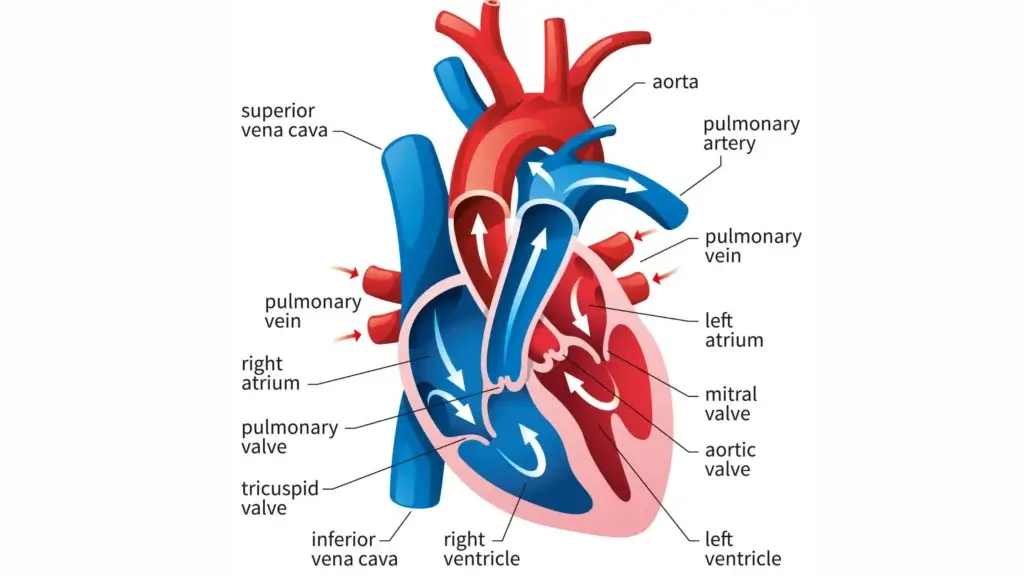
Zoology is a visual subject. Whether it is the structure of the Nephron or the Human Heart, you should be able to label diagrams correctly. Practice drawing them to remember the parts.
3. Focus on Human Physiology
This is the heart of Zoology. It carries the maximum weightage. Understand the mechanisms (how things work) rather than just memorizing facts. For example, understand how oxygen binds with hemoglobin.
4. Create Comparison Tables
For chapters like Animal Kingdom, create a table comparing different phyla (e.g., Symmetry, Coelom, Circulatory system). This makes it much easier to remember differences between groups.
5. Solve Previous Year Questions (PYQs)
Solve at least the last 10 years of NEET papers. This helps you understand the “language” of the questions and the topics that the NTA (National Testing Agency) loves to repeat.
Conclusion
Mastering NEET Zoology is all about consistency. By focusing on the high-weightage chapters like Human Physiology and Biotechnology, and using our Free PDF Revision Notes, you can significantly improve your rank. Remember, Biology is the subject that can give you the time needed to solve Physics and Chemistry.
Keep practicing, stay positive, and don’t forget to download your notes from Sarkariexampdf.in. Your white coat is waiting for you!
Frequently Asked Questions
What is Botany and Zoology in NEET?
Biology in NEET is divided into two parts: Botany, which is the study of plants, and Zoology, which is the study of animals and the human body. Each section typically consists of 45-50 questions.
How many Zoology chapters are in NEET?
There are approximately 15-18 chapters in Zoology across Class 11 and 12 NCERT. The main focus areas are Human Physiology, Reproduction, Evolution, and Biotechnology.
How to study Zoology for NEET?
The best way is to start with NCERT. Read a chapter, highlight key terms, and then solve MCQs. For complex topics like Neural Control, use flowcharts to understand the process.
How to make short notes of NEET Zoology?
Don’t copy the whole book. Use bullet points, flowcharts for cycles (like the Menstrual Cycle or Kreb’s Cycle), and focus on exceptions (e.g., animals that are mammals but lay eggs).
How to make short notes in Biology?
Divide your notes into three parts: Terms/Definitions, Diagrams, and Examples. Since Biology is memory-heavy, use mnemonics (memory tricks) to remember examples in the Animal Kingdom.
What is NEET Zoology notes?
NEET Zoology notes are condensed versions of the NCERT chapters. They include important highlights, simplified diagrams, and previous year trends to help students revise the entire syllabus in a very short time.
- Modern Physics: Chapters, MCQs & PDF Notes

- NEET Zoology Syllabus Chapterwise Weightage PDF and MCQs

- NEET Biology Short Notes – Chapter-Wise Revision, Download Free PDFs.
- Physics Notes – Download Free Physics Notes for Competitive Exams PDF

- Chemistry Notes – Free PDF for Competitive Exams
- IIT JEE Maths Practice Questions | Free PDF for JEE Mains
- Huheey Inorganic Chemistry PDF Guide | SarkariExamPDF.in
- NEET Question Paper | Free Biology, Chemistry & Physics PDFs
- NEET Biology Assertion Reason Questions | Free PDF Download
- NEET Test Series 2026 Download Free Test Series
- NEET Mock Test 2026: Free Practice Sets with Solutions for Smart Preparation
- JEE Mock Test 2026: Free Practice Papers with Solutions
- NEET Handwritten Notes PDF Download Now
- IIT Jee Handwritten Notes Pdf Free Download







Exam Expert & Content Strategist with over 5+ years of experience in the competitive exam sector. I specialize in analyzing government recruitment patterns and simplifying complex syllabi for aspirants. Having helped thousands of students through Sarkari Exam PDF, my mission is to provide authentic, updated, and high-quality study materials for SSC, UPSC, Railways, and Banking exams to help every candidate achieve their career goals.